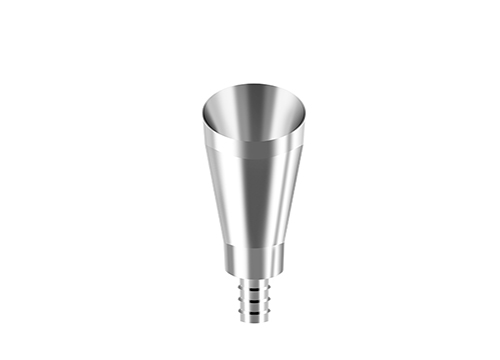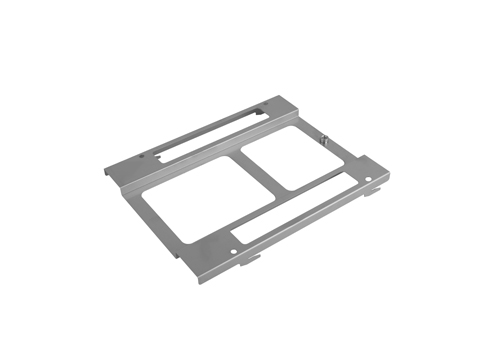

Fixture refers to a device used in the mechanical manufacturing process to fix the processed object in the correct position for construction or inspection, also known as a fixture. In a broad sense, any device used to quickly, conveniently, and safely install workpieces in any process of the manufacturing process can be called a fixture.
Fixtures usually consist of positioning elements (to determine the correct position of the workpiece in the fixture), clamping devices, tool guide elements (to determine the relative position of the tool and the workpiece or guide the direction of the tool), indexing devices (to enable the workpiece to complete multiple workstations in one installation, including rotary indexing devices and linear moving indexing devices), connecting elements, and clamping components (fixture base).

Welding fixtures, inspection fixtures, assembly fixtures, machine tool fixtures, etc., among which machine tool fixtures are the most common and often abbreviated as fixtures. When machining workpieces on machine tools, in order to ensure that the surface of the workpiece meets the technical requirements such as the size, geometric shape, and mutual positional accuracy with other surfaces specified in the drawing, the workpiece must be installed (positioned) and clamped (clamped) before machining.
The types of fixtures can be divided into:
① Universal universal fixtures according to their usage characteristics. Machine tools such as vises, chucks, suction cups, indexing heads, and rotary workbenches have great versatility and can adapt well to changes in machining processes and objects. Their structures have been finalized, and their sizes and specifications have been serialized, with most of them becoming standard accessories for machine tools.

② Specialized fixtures. Specially designed and manufactured for the clamping needs of a certain product component in a certain process, with a specific service target and strong specificity, usually designed by the product manufacturer themselves. Commonly used fixtures include lathe fixtures, milling machine fixtures, drilling dies (machine tool fixtures used to guide the tool to drill or hinge holes on the workpiece), boring dies (machine tool fixtures used to guide the boring bar to bore holes on the workpiece), and accompanying fixtures (mobile fixtures used for combination machine tool automatic lines).
③ Adjustable fixture. A specialized fixture that can replace or adjust components.
④ Combination fixture. A fixture composed of standardized components of different shapes, specifications, and uses, suitable for new product trial production, single piece, small batch production with frequent product replacement, and temporary tasks.
In addition to vises, chucks, indexing heads, and rotary workbenches, there is a more common term called tool holder. Generally speaking, when the term tool holder appears simultaneously, most of these fixtures refer to the tool holder.
1.Using machine tool fixtures to clamp workpieces can accurately determine the relative positional relationship between workpieces, cutting tools, and machine tools, ensuring machining accuracy.
2. Machine tool fixtures can quickly position and clamp workpieces, reducing auxiliary time and improving production efficiency.
3. The machine tool fixture adopts mechanical, pneumatic, and hydraulic clamping devices, which can reduce the labor intensity of workers.
4. By using machine tool fixtures, the machining range of the machine tool can be expanded. For example, using a boring die on a lathe or drilling machine can replace a boring machine to bore holes, making the lathe or drilling machine have the function of a boring machine.
1. Before use, check whether the limit size still maintains the correct position;
2. If the wear of the gear pin exceeds the tolerance, it can be repaired by grinding; If the wear of the baffle, pin, and positioning cone pin exceeds the tolerance, they can be reassembled, staggered in the worn parts, and continue to be used;
3. After use, it is necessary to apply anti rust oil.
Milling fixtures are used for milling machines, while turning fixtures are used for lathes.
Milling fixtures usually keep the workpiece stationary when the tool is moving, while turning fixtures rotate the workpiece when the tool feeds it.
Milling fixtures usually have a flat base, while turning fixtures are directly installed facing the table and sliding down to the lathe spindle.
The milling fixture fixes the workpiece from multiple sides, while the turning fixture clamps the outer diameter of the workpiece.
The grinding tool fixture must withstand the force of high-speed rotation of the tool, while the turning tool fixture must be able to withstand the resistance of the tool feed rotation or workpiece.
The selection of any fixture depends on the specific processing operation requirements, including details and specific design details. But overall, the goal is the same: firmly and consistently fixing the workpiece to achieve accurate and efficient metal cutting.

 English
 日本語
日本語 français
 Deutsch
 Español
 italiano
 русский
 português
 Svenska
 Ελλάδα
 Nederland