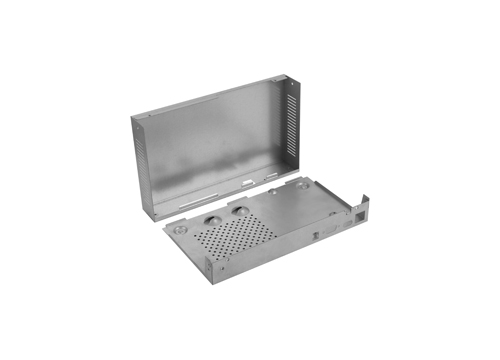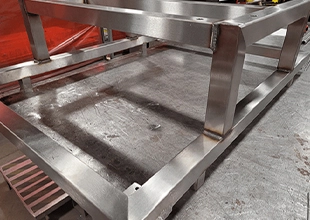

The "sense of security" of metal products is often hidden in every aspect of packaging. As a metal product manufacturing factory that has been deeply involved in the industry for many years, our rigor in packaging is no less than that of the production of the products themselves - after all, even the most precise metal parts cannot withstand bumps, moisture, or compression during transportation.
Here are the common packaging materials in our factory, their respective roles, and the key details that must be paid attention to when packaging metal products.
The neatly stacked wooden pallets in our workshop:
.jpg "图片1-Pallets(1).jpg")
The purpose of pallets:
.jpg "图片2-The_purpose(1).jpg")
Carrying heavy goods: dispersing the weight of metal products to avoid wear or moisture caused by direct contact of individual goods with the ground;
Convenient circulation: adapted to forklifts, pallet trucks and other tools, greatly improving the efficiency of warehousing, handling, logistics loading and unloading;
Stable stacking: Standardized pallet sizes make the stacking of goods more organized, saving warehouse space while reducing the risk of tipping.
Our details:
.jpg "图片3-Details(1).jpg")
Choose different load-bearing levels of pallets based on the weight of the metal parts (such as heavy-duty pallets corresponding to large metal components), reserve 30% load-bearing allowance, and avoid deformation from the source.
The stacked cardboard boxes in our workshop:
.jpg "图片4-Cartons(1).jpg")
The purpose of cartons:
Physical protection: blocking external dust and moisture, buffering minor collisions, and avoiding direct exposure of metal parts;
Size adaptation: Customized sizes can limit the displacement of products inside the box while avoiding resource waste caused by excessive packaging;
Information transmission: The label on the box body indicates the product model, weight, and protection requirements, enabling precise processing in the warehousing and logistics processes.
Our details:
.jpg "图片5-details(1).jpg")
For sharp metal parts, we use thick corrugated cardboard boxes with corner protectors or cardboard.
The bags of foam cotton in the workshop:
.jpg "图片6-Foam_cotton(1).jpg")
The purpose of foam cotton:
Shock absorption and buffering: absorb vibrations and bumps during transportation, avoid scratches and deformations caused by collisions between metal parts or cardboard boxes;
Accurate adaptation: Cut according to the shape of the product, fill the gaps inside the box, and prevent the goods from shaking;
Edge protection: Wrap sharp edges to prevent puncturing the cardboard box or scratching personnel/other goods.
Our details:
.jpg "图片7-details(1).jpg")
Profiled metal parts are wrapped with curved foam cotton, and heavy parts are added with bubble bags.
1. Rust prevention priority: Ensure that the surface of metal parts is dry before packaging, and add rust proof paper in damp areas;
2. Load bearing matching: The load-bearing capacity of pallets and cardboard boxes should be greater than the total weight of the goods (with a 30% margin reserved);
3. Corner protection: sharp corners must be wrapped separately with foam cotton/corner protectors;
4. Fix in place: the space in the box is filled with foam cotton, and the goods on the pallet are fixed crosswise and vertically with winding film.
From the load dispersion of card boards, to the outer isolation of cartons, to the precise cushioning of foam cotton - this "three piece set" combination is an important way for metal products to reach customers safely.

 English
 日本語
日本語 français
 Deutsch
 Español
 italiano
 русский
 português
 Svenska
 Ελλάδα
 Nederland