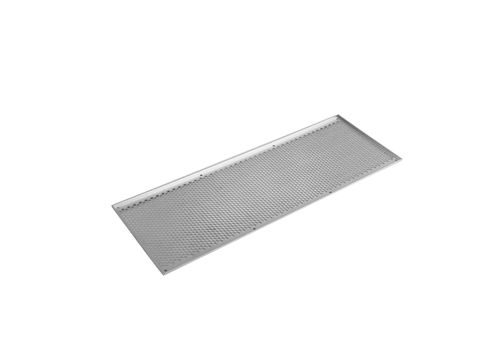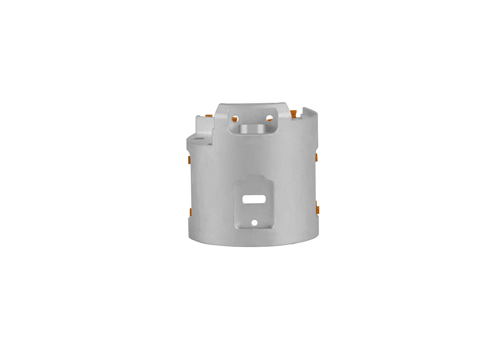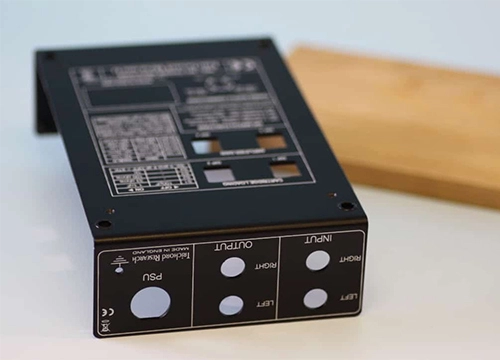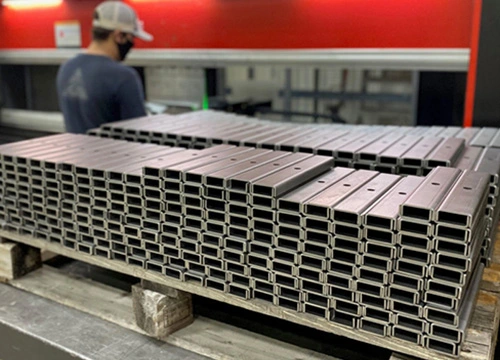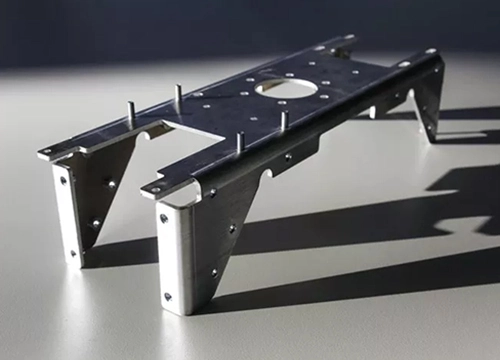

Sheet metal forming is one of the most critical processing steps in modern manufacturing, widely used in electronic enclosures, medical equipment, automation equipment, home appliances, communications, and automotive industries. Despite continuous improvements in CNC machining, various defects still occur during bending, stamping, and stretching processes, affecting appearance, assembly accuracy, and structural reliability.
We have summarized the most common defects in sheet metal forming and effective control methods to help engineers and manufacturing personnel improve yield and quality stability.
Defect Manifestation: Sharp protrusions appear on the edges after cutting or punching, affecting safety and dimensional accuracy.
Causes:
Tool dulling, excessive die clearance.
Punch edge wear
Excessively high material hardness
Inappropriate cutting parameters (laser/CNC punching)
Preventive Measures:
Regular maintenance and grinding of punches and tools
Adjust die clearance (generally 5-10% of the plate thickness)
Appropriately reduce speed for high-hardness materials
Optimize focal point position and air pressure during laser cutting
Add a deburring process if necessary (roller deburring, vibratory deburring, etc.)
Defect Manifestation: Bending angle is larger than the design value, making assembly difficult.
Causes:
High material elastic modulus
Excessive bending radius
Insufficient bending force
Mismatch between upper and lower die structures
Preventive Measures:
Determine the compensation angle through trial molding (e.g., pre-press to 88°, naturally spring back to 90°)
Use a smaller bending radius (ideally ≥ sheet thickness)
Increase blank holder force and bending depth
Select materials with lower springback characteristics (e.g., soft aluminum)
Include angle compensation in the design
Defect Manifestation: Scratches and indentations appear on the board surface, affecting the appearance quality.
Causes:
Rough mold surface or foreign objects
Lack of mold protection
Lack of protection during board transportation and handling
Excessive friction with the mold during bending
Preventive Measures:
Regularly polish the mold and keep it clean
Apply protective adhesive to the mold surface or use nylon molds
Add soft padding film between stacked boards
Optimize the bending sequence to reduce the contact area between the board and the equipment
Control the bending speed and avoid strong scratches
Defect Manifestation: Enlarged hole diameter, wrinkled hole edges, or irregular shape appear after punching.
Causes:
Incorrect die clearance
Uneven sheet thickness or high material strength
Unstable stamping speed or pressure
Too close hole spacing leading to material deformation
Preventive Measures:
Select a reasonable die clearance according to material properties (generally 6-8% of sheet thickness)
Shorten the distance between punching and bending, and optimize layout
Use a high-precision stamping press to avoid pressure fluctuations
For high-strength steel, reduce stamping speed and increase punch strength
Defect Manifestation: Cracks and whitening appear in the drawn parts, flanging, or bending areas.
Causes:
Excessive drawing depth
Insufficient material ductility
Insufficient radius (R) angle design
Insufficient die clamping force
Inappropriate forming method
Preventive Measures:
Increase the radius (R) angle and reduce the drawing ratio in the design.
Perform multiple drawing operations (segmented forming) if necessary.
Use materials with good ductility (such as deep-drawing steel DC04).
Add lubricant to reduce friction.
Increase the clamping force to prevent excessive material flow.
Defect Manifestation: Tear and white edge appear at the outer corner of the bend.
Causes:
Insufficient bending radius
Material fiber direction is consistent with the bending direction
Bending speed is too fast
Sheet material is too hard or not annealed
Preventive Measures:
Select the minimum bending radius recommended by the material (e.g., ≥ 1.5t for 5052-H32)
Make the bending direction as perpendicular as possible to the rolling direction of the material
Anneal hardened materials before bending
Reduce bending speed and apply force in stages
Defect Manifestation: Warping and twisting of the plate surface after welding, affecting dimensional stability.
Causes:
Uneven heating of thin plates generates thermal stress.
Improper welding sequence.
Excessive heat input.
Preventive Measures:
Use TIG/MIG low-current welding to reduce heat input.
Use spot welding instead of long welds.
Use fixtures for fixation and symmetrical welding.
Use skip welding to distribute heat.
Immediately perform cold pressure straightening after welding.
Defect Manifestation: Height and side length after bending do not conform to the drawing dimensions.
Causes:
Insufficient K-value/Bend allowance calculation
Bending coefficient not adjusted according to material properties
Inaccurate workpiece positioning
Preventive Measures:
Set accurate K-values according to different materials and plate thicknesses
Use standard bending compensation formulas for flattening
Strictly adhere to tooling positioning to avoid misalignment
Regularly calibrate the accuracy of dies and bending machines
Defect Manifestation: Bulges, ripples, or dents appear after bending or stamping large areas of sheet metal.
Causes:
Residual stress in the sheet metal
Inappropriate processing sequence
Uneven localized stress
Preventive Measures:
Use a leveling machine to eliminate sheet metal stress
Add stiffening ribs to improve rigidity
Optimize bending and stamping sequence
Avoid large-area single operations (e.g., large-area stamping in one go)
In summary, sheet metal forming defects are rarely caused by a single factor, but rather by a combination of factors including material properties, mold condition, process parameters, and equipment precision.
To effectively reduce defects and improve finished product quality, the following must be done:
Optimize the process from the design stage
Strictly control the precision of molds and equipment
Standardize processing parameters and bending compensation
Establish a comprehensive inspection and feedback mechanism

 English
 日本語
日本語 français
 Deutsch
 Español
 italiano
 русский
 português
 Svenska
 Ελλάδα
 Nederland