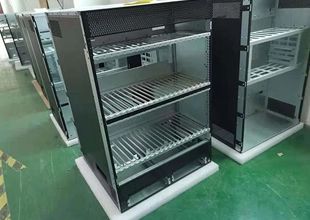

Passivation refers to the process of metal being oxidized by strong oxidants or electrochemical methods to make the surface inactive, i.e. passivated. It is a method of transforming the metal surface into a state that is not easily oxidized and delaying the corrosion rate of the metal. In addition, a phenomenon in which the chemical activity of an active metal or alloy is greatly reduced and becomes a precious metal state is also called passivation.

The mechanism of passivation can be explained by thin film theory, which suggests that passivation is due to the interaction between metals and oxidizing substances, resulting in the formation of a very thin, dense, well covered, and firmly adsorbed passivation film on the metal surface. This layer of film exists as an independent phase, usually composed of metal oxide compounds. It plays a role in completely separating the metal from the corrosive medium, preventing the metal from coming into contact with the corrosive medium, thus making the metal basically stop dissolving and form a passive state to achieve anti-corrosion effect.
Passivation is due to the interaction between metals and oxidizing media, which generates a very thin, dense, and well covered passivation film on the metal surface that can firmly adhere to the metal surface. This layer of film exists as an independent phase, usually a compound of oxygen and metal. It plays a role in completely separating the metal from the corrosive medium, preventing direct contact between the metal and the corrosive medium, thereby causing the metal to basically stop dissolving and form a passive state to achieve the effect of preventing corrosion.

The main difference between passivation and rust proof oil is that they produce different products; Rust proof oil effectively prevents rust by sealing the pores on the metal surface with an oil film to isolate them from oxygen contact, without any actual reaction. The oil film is relatively easy to be removed and damaged during production, resulting in failure; Passivation, on the other hand, utilizes the oxidizing substances in the passivation solution to undergo oxidation-reduction reactions with metals, promoting the formation of a layer of metal oxide on the metal surface and achieving effective protection of the metal. This process belongs to a chemical reaction. The generated passivation film is dense, complete, and not easily damaged.
Tank Immersion: The component will be immersed in a tank containing a chemical solution, which is beneficial for treating all machined surfaces simultaneously, ensuring surface consistency and optimal corrosion resistance.
Circulation: This method is particularly suitable for pipeline systems that transport corrosive liquids, where chemical solutions circulate through the pipeline system.
Spray Application: Spray a chemical solution onto the surface of a component. Appropriate acidic waste treatment and safe operating procedures are crucial for this method, and it is particularly suitable for on-site processing.
Gel Application: Manual treatment by brushing paste or gel like substances onto the surface of components. This method is suitable for welding points and other complex areas that require manual detail processing, and has the advantage of local processing.
Anodized aluminum and titanium.
Iron containing materials such as steel.
Stainless steel may have a chromium oxide surface.
Nickel, some applications contain nickel fluoride.
Organosilicon, silicon dioxide used in the semiconductor industry.
(1) Compared with traditional physical sealing methods, passivation treatment has the characteristics of absolutely not increasing the thickness and changing the color of the workpiece, improving the precision and added value of the product, and making the operation more convenient.
(2) Due to the non reactive nature of the passivation process, the passivating agent can be repeatedly added and used, resulting in a longer lifespan and more economical cost.
(3) Passivation promotes the formation of oxygen molecule structure passivation film on the metal surface, which is dense, stable in performance, and has self repairing effect in air. Therefore, compared with the traditional method of coating anti rust oil, the passivation film formed by passivation is more stable and corrosion-resistant.
(1) Passivation cannot effectively remove contaminants from welded components.
(2) According to the specified metal alloy, the temperature and type of chemical bath must be maintained. This will increase the cost and complexity of the process.
(3) Acid baths may damage some metal alloys, especially those with lower chromium and nickel content. Therefore, these alloys cannot be passivated.

 English
 日本語
日本語 français
 Deutsch
 Español
 italiano
 русский
 português
 Svenska
 Ελλάδα
 Nederland