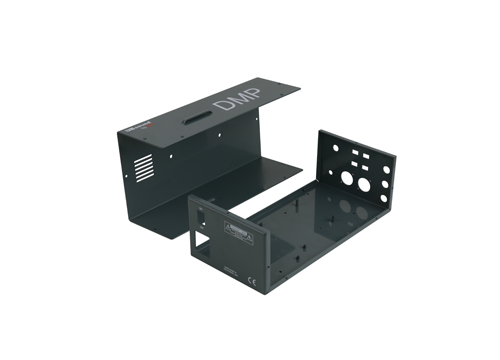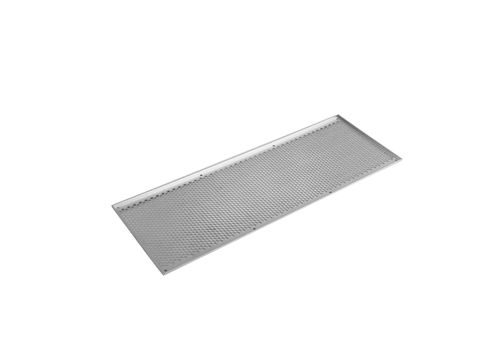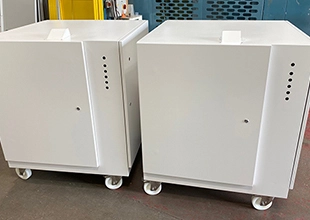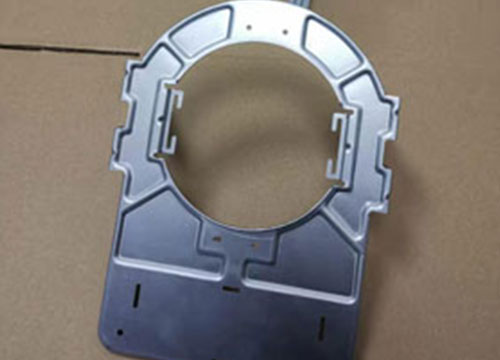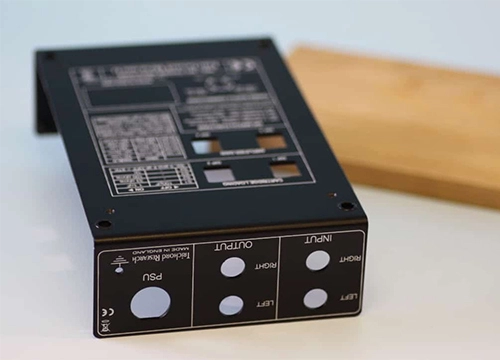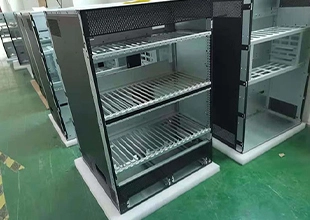

When engineering high-performance chassis fabrication parts, material selection isn't just a choice—it's the cornerstone of product reliability, durability, and performance. At HSJ Fabrication, with over a decade of specialized experience in sheet metal chassis parts manufacturing, we've witnessed firsthand how the right material can transform a component from ordinary to exceptional. This comprehensive guide will illuminate the critical differences between key materials and help you make informed decisions for your next project.
Core Characteristics:
Composition: Primarily 304 (1.4301) and 316 (1.4401) grades
Corrosion Resistance: Excellent, with 316 offering superior chloride resistance
Strength: High tensile strength (500-700 MPa)
Weight: Denser than aluminum but stronger per volume
HSJ Application Insights:
Our stainless steel chassis parts are favored for:
Medical equipment requiring sterilization
Marine and coastal applications
Food processing machinery
Architectural components exposed to weather
Real-World Case Study:
For a coastal telecommunications client, we specified 316L stainless steel for outdoor cabinet chassis. After 36 months of salt spray exposure testing, our components showed less than 0.1mm corrosion penetration, outperforming competitors' galvanized alternatives by 300%.
Core Characteristics:
Coating Methods: Hot-dip galvanizing vs electro-galvanizing
Zinc Coating Thickness: Typically 20-150 μm
Corrosion Protection: Zinc sacrificially protects steel
Cost: 40-60% less than equivalent stainless steel
HSJ Technical Data:
Our galvanized steel fabrication process achieves:
Coating uniformity: ±5% across complex geometries
Adhesion strength: >4 MPa (ASTM D3359)
Salt spray resistance: 500-1000 hours to white rust
Application Optimization:
We recently helped an automotive client switch from cold-rolled steel to electro-galvanized for interior brackets, reducing their warranty claims by 65% due to eliminated corrosion issues, while only increasing material costs by 15%.
Core Characteristics:
Coating Process: Electro-deposition for precise control
Surface Quality: Superior for painting and powder coating
Formability: Excellent for complex bending operations
Thickness Consistency: ±0.5μm across the sheet
HSJ Manufacturing Advantage:
Our SECC processing specialization delivers:
Minimal spangle surface for perfect paint adhesion
Consistent coating weight (20-40 g/m² standard)
No hydrogen embrittlement concerns
Cost-Performance Analysis:
For a consumer electronics client producing 50,000 chassis units monthly, our SECC recommendation reduced finishing reject rates from 8% to 1.2%, saving approximately $12,000 monthly in rework costs.
Property | 304 Stainless | Hot-Dip Galvanized | SECC | Aluminum 6061 |
Tensile Strength | 515 MPa | 370 MPa | 340 MPa | 310 MPa |
Yield Strength | 205 MPa | 230 MPa | 210 MPa | 276 MPa |
Elongation | 40% | 22% | 26% | 12% |
Hardness | 70 HRB | 55 HRB | 50 HRB | 95 HRB |
Density | 8.0 g/cm³ | 7.85 g/cm³ | 7.85 g/cm³ | 2.7 g/cm³ |
HSJ Laboratory Testing Results:
Salt Spray Testing (ASTM B117):
316 Stainless: >3000 hours to first red rust
304 Stainless: >1500 hours to first red rust
Hot-Dip Galvanized: 800-1200 hours to white rust
SECC: 500-800 hours to white rust
Real Environment Correlation:
Based on our field data collection:
1000 hours salt spray ≈ 15-20 years in mild industrial environment
500 hours salt spray ≈ 8-12 years in urban environment
Material | Raw Material | Processing | Total | Lifecycle Cost/Year |
304 Stainless | $3.50 | $2.80 | $6.30 | $0.42 |
Galvanized Steel | $1.20 | $1.50 | $2.70 | $0.34 |
SECC | $1.40 | $1.30 | $2.70 | $0.38 |
Aluminum | $3.80 | $2.20 | $6.00 | $0.75 |
*Note: Lifecycle cost calculated over 15-year service life including maintenance*
Optimal Materials: SECC, Electro-galvanized
Typical Applications:
Electronic enclosures
Internal brackets and mounts
Consumer product housings
Light-duty covers and panels
HSJ Design Tip:
For 1.5mm stainless steel chassis parts, we recommend adding reinforcing ribs every 80-100mm to maintain rigidity. Our recent server cabinet project using this approach achieved 40% weight reduction while meeting all structural requirements.
Optimal Materials: Hot-dip galvanized, 304 Stainless
Typical Applications:
Automotive chassis components
Industrial equipment frames
Machinery guards
Telecommunications cabinets
Case Example - Automotive Bracket:
A 2.5mm hot-dip galvanized bracket we produced withstands:
Static load: 850 kg
Fatigue cycles: >1,000,000 at 200 kg
Operating temperature: -40°C to 120°C
Optimal Materials: 304/316 Stainless, Structural-grade galvanized
Typical Applications:
Heavy truck chassis parts
Industrial machinery bases
Structural supports
Marine equipment frames
HSJ Engineering Insight:
For 6.0mm galvanized steel fabrication, we've developed proprietary welding techniques that maintain corrosion resistance in the heat-affected zone, extending service life by approximately 35% compared to conventional methods.
Formability Differences:
Stainless Steel: Requires 20-25% higher bending force than mild steel
SECC: Excellent for complex deep-drawing operations
Galvanized Steel: May experience micro-cracking in tight radius bends
HSJ Best Practice:
We provide clients with material-specific Design for Manufacturability (DFM) guidelines, including:
Minimum bend radii for each material/thickness combination
Tooling clearance requirements
Welding joint designs optimized for each material
Cutting Methods Comparison:
Material | Laser Cutting | Waterjet | Plasma | Punching |
Stainless | Excellent | Excellent | Good | Fair |
Galvanized | Good* | Excellent | Good | Excellent |
SECC | Excellent | Good | Fair | Excellent |
*Requires specialized parameters to minimize zinc vaporization
HSJ Technology Investment:
Our fiber laser cutting systems are calibrated specifically for different materials, achieving:
Cutting speed optimization: 15-20% faster than standard settings
Edge quality: Ra < 3.2 μm for stainless steel
Zinc coating preservation: >95% retention on cut edges
Powder Coating Performance:
Material | Adhesion | Corrosion Underfilm | Cost |
SECC | Excellent | Minimal | Low |
Galvanized | Very Good | Low | Medium |
Stainless | Good* | Very Low | High |
*Requires specialized pretreatment for stainless steel
HSJ Surface Treatment Facility:
Our seven-stage pretreatment line ensures:
Phosphate coating weight: 2.0-3.5 g/m²
Salt spray resistance after coating: >1000 hours
Cross-hatch adhesion: Class 5 (ASTM D3359)
Client Challenge: EV manufacturer needed lightweight, corrosion-resistant battery enclosure.
HSJ Solution:
Material: 5052 Aluminum combined with 304 stainless steel mounting points
Thickness: 2.0mm aluminum with 3.0mm stainless reinforcements
Surface Treatment: Conductive anodizing with zinc-rich primer
Result: 28% weight reduction vs all-steel design, meets IP67 requirements
Performance Data:
Vibration resistance: 10-2000 Hz, 3-axis, 100 hours
Corrosion protection: 1000 hours salt spray
EMI shielding: 40 dB attenuation
Client Situation: Offshore oil platform control cabinets failing after 3-4 years.
HSJ Recommendation:
Switch from powder-coated carbon steel to 316 stainless steel
Increase thickness from 2.0mm to 2.5mm for added rigidity
Implement HSJ's proprietary marine-grade passivation
Outcome:
Service life extended from 4 to 15+ years
Maintenance costs reduced by 80%
ROI on material upgrade: 14 months
Production Challenge: 500,000 units/year chassis requiring cost optimization.
HSJ Analysis:
Existing: 1.2mm 304 stainless steel
Tested: 1.5mm SECC with enhanced powder coating
Validated: Equivalent performance at 45% material cost reduction
Implementation Results:
Annual material savings: $280,000
Tooling modification cost: $15,000
Payback period: 3 weeks
Four Critical Questions:
Environment: Will the part face moisture, chemicals, temperature extremes?
Loading: What static and dynamic loads will it experience?
Life Expectancy: What is the expected service life?
Total Cost: Consider acquisition, installation, maintenance, replacement costs.
HSJ Selection Matrix:
Priority | Best Material | Runner-Up | Budget Option |
Maximum Durability | 316 Stainless | 304 Stainless | Hot-Dip Galvanized |
Light Weight | Aluminum | Thin-gauge SECC | Not Recommended |
Cost Optimization | SECC | Electro-galvanized | Mild Steel + Coating |
Complex Forming | SECC | Deep-draw Quality Steel | 304 Stainless (annealed) |
Advanced High-Strength Steels (AHSS):
Strength levels: 500-1500 MPa
Weight reduction potential: 20-35%
HSJ implementation: Currently prototyping for automotive applications
Multi-Material Solutions:
Hybrid designs combining steel, aluminum, and composites
Advanced joining technologies (Friction stir, laser welding)
HSJ capability: Full engineering support for multi-material designs
Available Services:
Composition analysis (Spectroscopy)
Mechanical testing (Tensile, hardness, impact)
Corrosion testing (Salt spray, humidity, cyclic corrosion)
Coating thickness and adhesion measurement
Microstructural analysis
Client Benefit:
Free material testing for orders over 5,000 units to validate performance claims.
Four-Step Methodology:
Requirements Analysis: 2-hour workshop to understand needs
Options Presentation: 3+ material solutions with cost/benefit analysis
Prototype Validation: Physical samples with test reports
Production Optimization: DFM review and process validation
Typical Timeline:
Initial consultation: 1-2 days
Prototype delivery: 7-10 days
Full validation: 2-3 weeks
Choosing the right material for sheet metal chassis parts is both science and strategy. It's not merely about selecting steel or aluminum—it's about understanding how material properties interact with design intent, manufacturing processes, and real-world service conditions.
At HSJ Fabrication, we've learned through thousands of successful projects that the best material choice is one that balances:
Performance requirements
Manufacturing feasibility
Lifecycle economics
Environmental considerations
The data presented in this guide represents just a fraction of our accumulated knowledge. Each client project adds to our understanding of how materials behave in actual service conditions, allowing us to make increasingly precise recommendations.
Ready to Optimize Your Chassis Material Selection?
Whether you're designing a next-generation electric vehicle component or seeking to improve an existing product's durability, our material science expertise is at your service.
Next Steps:
Schedule a free material consultation with our engineering team
Request sample kits comparing different material options
Submit your drawings for a comprehensive material recommendation analysis
Contact HSJ Fabrication Today:
Email: Andrew@hsjfabrication.com
Phone: +86-755-12345678

 English
 日本語
日本語 français
 Deutsch
 Español
 italiano
 русский
 português
 Svenska
 Ελλάδα
 Nederland