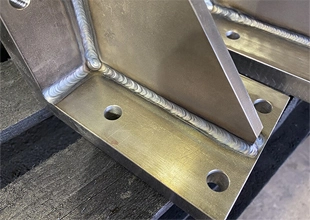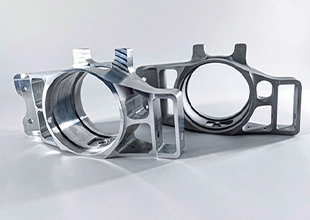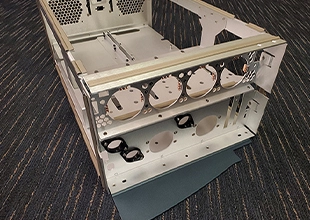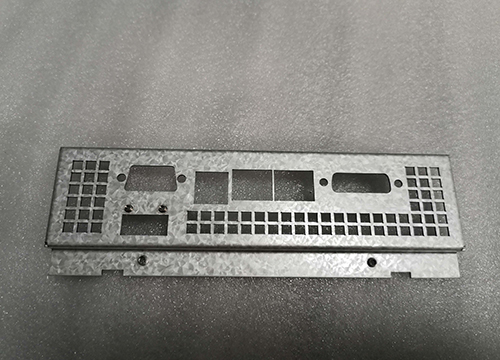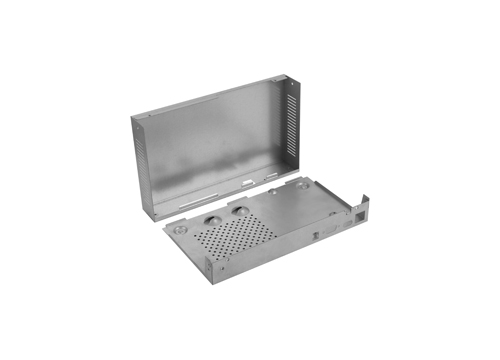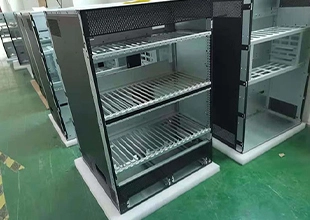

In the sheet metal manufacturing industry, "sample production" and "mass production" often employ completely different strategies and processes. Although both are based on the same design drawings, there are fundamental differences between sample production and mass production, from equipment selection and process flow to cost structure and quality control.
Prototype – Design Validation
The primary purpose of a prototype is not speed or cost, but to verify the feasibility of the design drawings, including:
Structural and dimensional rationality
Assembly interference checks
Functional testing
Design Factory Feasibility (DFM)
The prototype stage allows for some repairs and modifications.
Mass Production – Pursuing Stability, Efficiency, and Consistency
Mass production emphasizes
Integrity in every single piece
High efficiency
Reduced manufacturing costs
Sustainable quality standards
Therefore, mass production requires strict fixtures, standardized processes, and a complete quality system.
Sample Process Characteristics
Samples typically employ "flexible and rapid" processing methods:
Laser cutting instead of die stamping
Manual bending, independent machine adjustment
Temporary fixtures
Manual grinding and assembly
Single-piece or small-batch welding
Advantages: High speed, can be modified at any time
Disadvantages: Poor consistency, low repeatability
Mass Production Process Characteristics
Mass production is entirely different, requiring "standardized, replicable, and efficient" methods:
Die stamping, inline dies, progressive dies
Dedicated bending tools, unified programming
Automated welding fixtures
Automatic riveting, automatic tapping, robotic welding
Mass surface treatment (spraying, electroplating, oxidation)
Mass production processes improve efficiency, but require longer preparation time and investment (die-making, fixtures, etc.).
Why are Samples Expensive?
The high price of samples typically stems from high proportion of manual operation, multiple machine adjustments (bending, welding, painting), repeated trial and error, high management costs and inability to amortize machine costs.
A sample may require engineers to repeatedly program and debug, but the actual processing time is only a few minutes.
Why Do Mass Production Costs Decrease?
In mass production:
Tooling and fixture costs can be amortized across each piece
Machine adjustments only need to be performed once
Automated equipment can operate continuously
Higher material utilization (optimized layout)
Therefore, the unit cost is often much lower than that of a sample.
Sample Stage: Tolerant Deviation
The goal of the sample is to verify functionality; therefore, the following aspects can be appropriately relaxed:
Appearance consistency
Minor differences in bending angles
Weld length and aesthetics
Small local defects
Because samples are primarily used for testing and engineering verification.
Batch Stage: Consistency Must Be Achieved
Quality control for batch production includes:
Incoming Quality Control (IQC)
First Article Inspection (FAI)
In-Process Quality Control (IPQC)
Final Quality Control (FQC)
Fixed fixtures ensure dimensional consistency
Strict QC record and traceability system
Every product must strictly conform to drawings and quality standards.
Sample Delivery Time, commonly 7–10 days, due to: No mold making, flexible manual processing, orders can be placed on demand
Batch Delivery Time, typically requires 3–6 weeks because: Automated fixture and mold making, batch production scheduling, large number of processes queuing, large-scale quality inspection and packaging processes, and surface treatment requires time (powder coating/electroplating/anodizing).
Sample Stage:
Drawings may be incomplete.
Optimization can be done on-the-spot.
Engineers directly participate in discussions.
Mass Production Stage:
The following must be clearly provided:
Formal engineering drawings
Material, welding, and surface treatment standards
Tolerance requirements
Packaging and shipping methods
AQL (Acceptance Quality Level) standards
These documents will affect the stability and consistency of the entire mass production process.
In summary, sample verification confirms feasibility, while batch verification confirms stability. Samples only indicate "it can be done," while batch verification confirms "it can be done continuously and at a controllable cost."

 English
 日本語
日本語 français
 Deutsch
 Español
 italiano
 русский
 português
 Svenska
 Ελλάδα
 Nederland