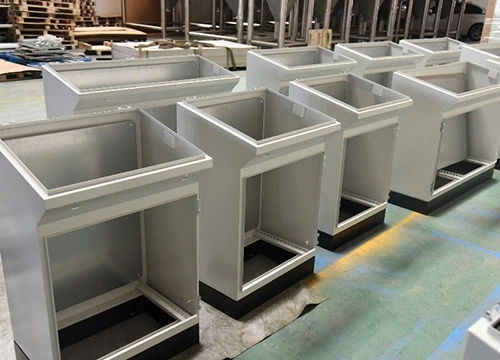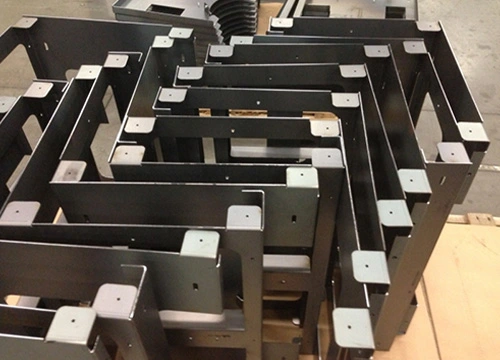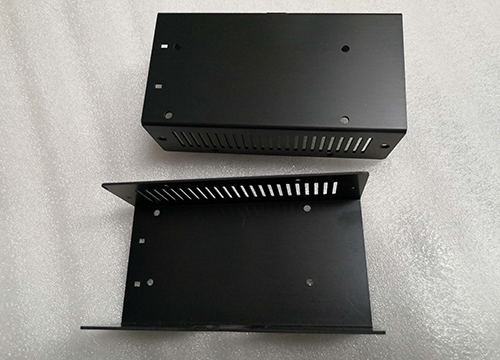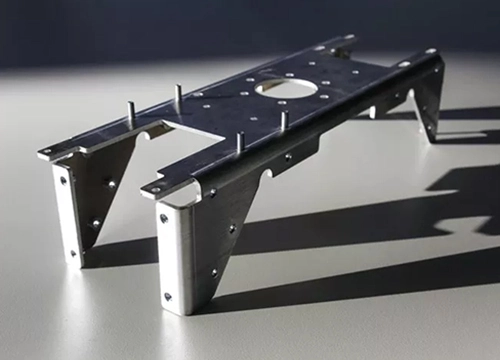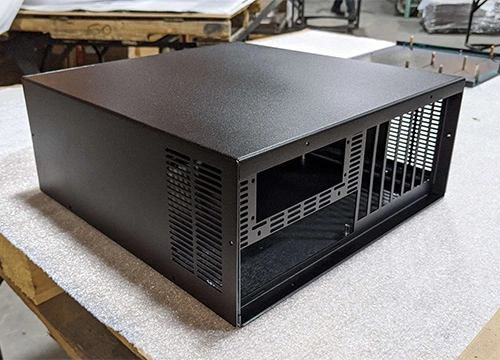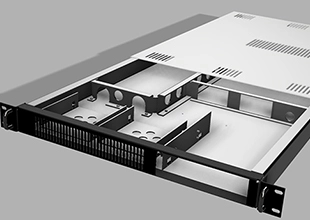

Cold rolled steel plate (commonly known as cold plate, often mistakenly written as cold rolled plate) is a thin steel plate made from hot-rolled coils and rolled at room temperature. Its thickness is usually less than 4 millimeters, with a smooth surface and high dimensional accuracy. It is widely used in the fields of automobile manufacturing (body, chassis, etc.), electrical products, home appliance casings, and building structures.

The production process of cold-rolled sheet includes acid washing, rolling hardening, annealing and other steps, without the production of iron oxide scale, and has good mechanical properties. After annealing treatment, the mechanical properties are significantly improved and can be processed into steel plates or coils. Corrosion resistant sheets can be derived through processes such as galvanizing and aluminum zinc plating, and used in the production of electrical steel, color coated sheets, etc.
Advantages:
High Surface Finish: The cold-rolled surface is smooth and flat, making it suitable for products requiring high aesthetics.
High Dimensional Accuracy: Thickness and width can be more precisely controlled, making it suitable for precision parts.
Excellent Mechanical Properties: High strength and hardness, with a yield strength higher than that of hot-rolled plate.
Suitable for subsequent surface treatments such as electroplating and spray coating, achieving improved adhesion.
Suitable for deep drawing and stretch forming (e.g., automotive panels and appliance housings).
Disadvantages:
High Cost: The cold rolling process is complex and energy-intensive, resulting in a higher price than hot-rolled plate.
Poor Plasticity: High strength but low ductility, prone to work hardening during processing.
Thickness Restrictions: Cold-rolled plate is generally limited to 4mm or less, making it unsuitable for producing very thick steel plates.
Hot rolled plate is a general term for hot-rolled steel plates and strips, with a width usually ≥ 600mm and a thickness range of 0.35-200mm (steel plates) or 1.2-25mm (steel strips).

By high-temperature rolling (1100-1250 ℃), the metal grain structure is changed and internal defects are removed. The finished product can be divided into straight coil, split coil, and flat coil. The material of this product is divided into low carbon steel (C ≤ 0.25%), medium carbon steel (C 0.25-0.60%), and high carbon steel (C ≥ 0.60%) according to carbon content, and low alloy steel (total alloy content ≤ 5%) and medium high alloy steel according to alloy element content. Classified based on edge state (trimmed/uncut) and rolling accuracy (normal accuracy/high accuracy), it is widely used in fields such as ships, automobiles (frames, crossbeams, etc. with a thickness of 4mm or more), bridges, mechanical manufacturing, and pressure vessels
Advantages:
Relatively low price: The process is simple, production efficiency is high, and costs are low.
Excellent plasticity, suitable for large deformation processing: The high temperature during hot rolling increases the steel's ductility, making it suitable for rolling large-gauge and thick steel plates.
Dense internal structure: High-temperature rolling results in more uniform grains and excellent overall mechanical properties.
Wide range of applications: Commonly used in buildings, bridges, vehicles, and large structural components.
Disadvantages:
Low dimensional accuracy: Hot-rolled steel undergoes uneven cooling shrinkage, resulting in wide thickness tolerances.
Poor surface quality: The steel is prone to scale, pitting, and high roughness.
Mechanical properties are inferior to those of cold-rolled steel: Its strength and hardness are relatively low.
Plasticity is limited by subsequent processing: Further cold rolling or heat treatment is often required for fine finishing.
Cold-rolled steel plate and hot-rolled steel plate may seem to differ only in processing temperature, but they actually serve completely different applications: one is suited to industrial construction and heavy machinery, while the other is suited to precision sheet metal and decorative parts. In actual manufacturing, the right material selection can not only reduce costs but also improve product performance and lifespan.

 English
 日本語
日本語 français
 Deutsch
 Español
 italiano
 русский
 português
 Svenska
 Ελλάδα
 Nederland