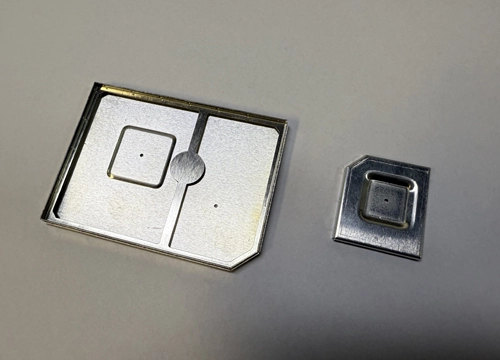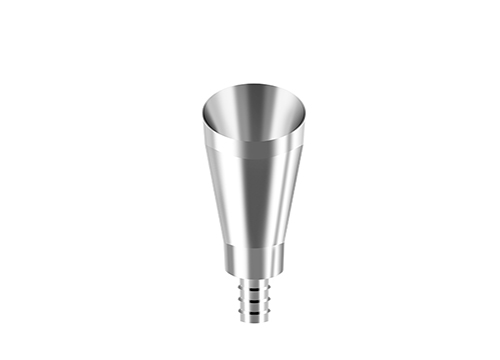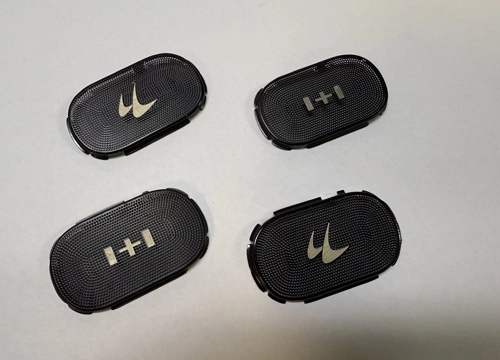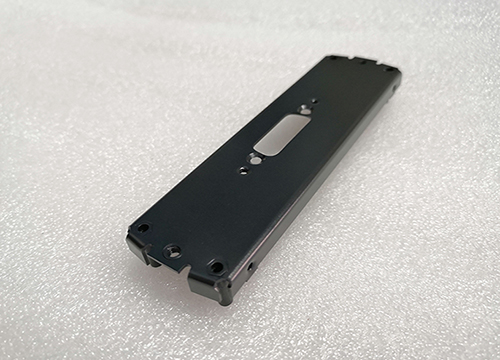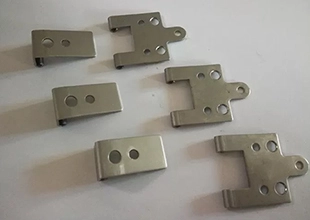

Sheet metal processing is a machining technique that applies force to thin sheet metal to deform it and create three-dimensional shapes. The processing methods of sheet metal processing can be roughly divided into manual sheet metal and mechanical sheet metal. Manual sheet metal is formed by manually applying force to the metal plate using tools such as hammers, while mechanical sheet metal is formed by sandwiching the material between molds and applying hydraulic or other mechanical forces.
In sheet metal processing, various methods are used to apply force to plate-shaped metal to form the target shape, and the principle is related to the characteristics of the metal material. When a load is applied to a metal material, the material changes the distance between its constituent atoms and deforms while generating strain. At this point, the force (internal force) that the metal attempts to recover to its original state from the beginning comes into play, so when the load is small, if the load is removed, the metal will return to its original state (elastic deformation). When a continuous load is applied to a metal beyond a certain point (yield point), the metal cannot recover (plastic deformation). If the load continues to be applied, it will be overwhelmed and break.
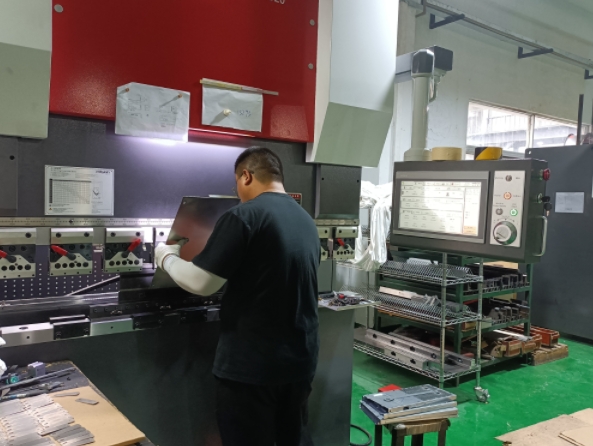
In sheet metal processing, it is important to have edge adjustment and processing techniques in order to obtain the target shape through plastic deformation.
1. Expand/Program
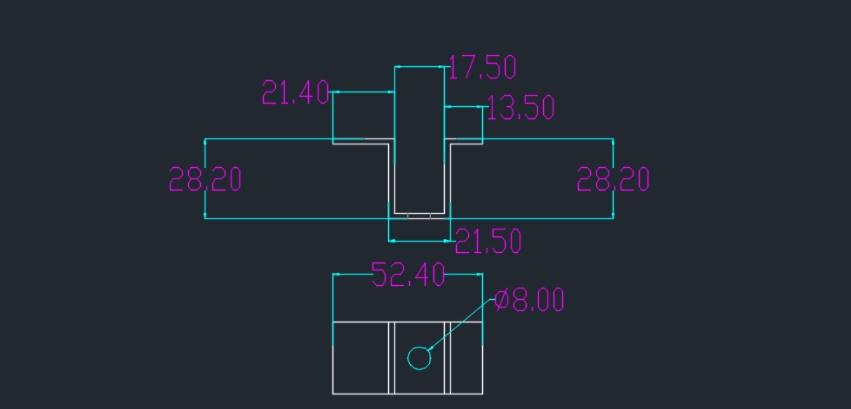
Design drawings are often drawn using 3D CAD, while sheet metal processing must be done from a single sheet metal. Therefore, it is necessary to use CAD and specialized software to "unfold" the process into the state of a single sheet metal before processing. Once the drawing is unfolded, "typesetting" is carried out, which means arranging the parts so that they can be efficiently obtained from standard sized materials without causing waste, and at the same time, the machining program is developed.
2. Punching/cutting
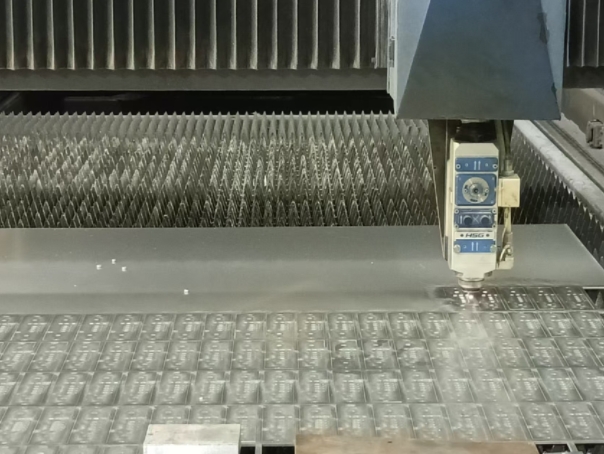
In the process of cutting the outer periphery and inner holes of metal plates, also known as material cutting, laser cutting machines and turret punching machines are mainly used for processing. Roughly speaking, laser processing machines are skilled in high-speed cutting of outer and large holes, while turret punch presses are capable of handling a large number of holes and forming processes.
3. Deburring
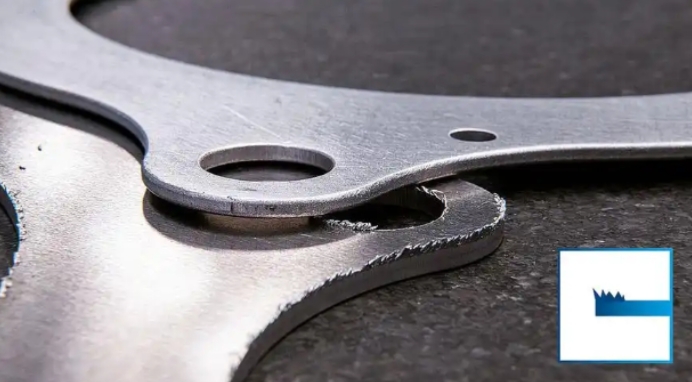
No matter which processing method is used in the previous process, laser cutting burrs (slag), punching shear burrs, flying edges, etc. will be generated to a certain extent. Removing these is the deburring process. It can be manually completed using a manual angle grinder or file, or processed using a deburring machine with rotating sandpaper.
In deburring of sheet metal processing, it is difficult to achieve precise dimensional management such as C0.2 and R0.2 like in cutting processing. In this regard, the drawing indication of 'no burrs' is ambiguous, but if the indication is' to remove burrs to a degree that will not cut hands', it seems to be effective. When placing an order, it is best to reach a consensus with the processing factory regarding the allowable range of burrs.
4. Bending
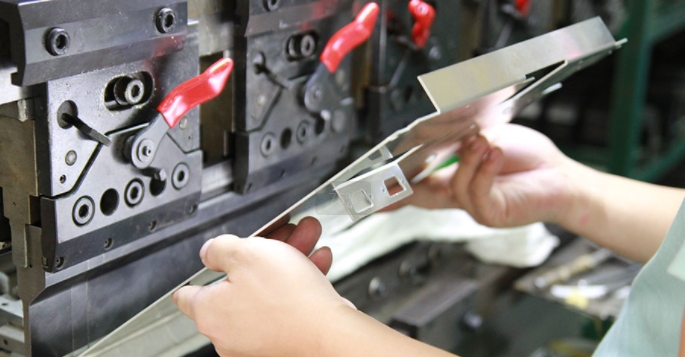
The general bending process of mechanical sheet metal is to install the mold onto a device called a bending machine and apply pressure to the cut sheet metal, causing it to bend linearly at a certain angle. In the bending machine, the upper mold (convex mold) is installed on the upper part of the equipment, and the lower mold (concave mold) is installed on the lower part. The upper part of the equipment moves up and down to bend the metal plate, but the angle obtained by bending varies depending on the material batch and rolling direction, so it needs to be fine tuned every time, making processing difficult.
However, it can be said to be one of the most important processes in sheet metal processing, as the difficulty and aesthetics of welding in subsequent processes can vary greatly due to the accuracy of the bending process. In addition, "bending machine" is sometimes also referred to as "bending machine", "bending machine", etc., all of which refer to the same type of equipment.
5. Welding
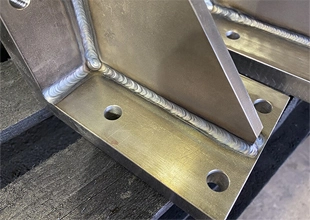
Welding processing is a process of joining metals by heating them to melt and then cooling them. TIG welding and laser welding are mainly used in sheet metal processing. TIG welding using tungsten electrodes is sometimes referred to as "argon arc welding" because argon gas is used as a shielding gas.
TIG welding can be carried out by adding filler rods to the molten part for surfacing, but on the other hand, deformation is prone to occur due to the large amount of heat input into the material. The processing results largely depend on the skills of the craftsman. Laser welding is a processing method that can suppress thermal strain and has the advantage of easy standardization of processing technology. However, because it is based on base metal welding, it is difficult to use this method for parts with welding requirements, and the processing method needs to be changed.
6. Precision machining (including surface treatment)
The precision machining process of sheet metal processing includes removing the thermal strain generated by welding, using a grinder to cut off the protruding parts of the weld deposit, using electrolytic polishing to remove burns caused by welding, and surface polishing treatment (grinding, polishing).
7. Assembly
This is the process of assembling multiple parts together and mainly using fastening parts such as bolts, nuts, and rivets for assembly. Mostly used for parts that do not require welding strength or require disassembly operations later. Assembly work, also known as "assembly", covers a wide range of tasks and processes, from small assembly of parts to medium-sized units and the final assembly of entire machines and equipment. In the sheet metal processing industry, some companies refer to the above welding assembly process as "assembly" (welding assembly).
8. Inspection
In the pre delivery inspection of sheet metal processed products, visual inspection is usually carried out for size and appearance. In size inspection, we mainly use calipers, scales, angle gauges, etc. to check for errors in size, hole position, and accuracy by comparing the drawings with the finished product. In the appearance inspection, we will visually inspect the product for scratches and burrs. Some factories use image measuring instruments or coordinate measuring instruments for inspection.
The materials used in sheet metal processing include stainless steel, carbon steel (SPCC, SECC), aluminum alloy, and other types. The thickness of the board also varies depending on the material, ranging from t0.1 to 22mm. Please consider the purpose and processing characteristics of the product when choosing.
The biggest advantage of sheet metal processing is that it is suitable for small-scale and multi variety production. Stamping processing is a representative processing method of plastic processing, suitable for mass production of many parts with the same shape. However, due to the need to manufacture molds for each product, the product price will be high unless mass production is carried out.
In this regard, sheet metal processing uses universal equipment in all processes such as punching, bending, and welding, and universal molds are also used in bending processing. Therefore, in addition to being able to handle small batch and multi variety manufacturing, it can also flexibly respond to design changes. In addition, the ability to produce complex shaped products from a single board through a combination of "punching," "bending," and "welding" is also a major advantage.
On the other hand, its disadvantage is that the parts are processed one by one, so if a large number of identical parts are produced, it will take a lot of time to produce. Especially in welding, a large part of it relies on technical skills, which not everyone can process, so it is not suitable for mass production.
Order based on the manufacturer's expertise
Although they are all called "sheet metal processing manufacturers", each company's equipment is also diverse. It is possible to reduce costs by placing orders based solely on the characteristics of the processing equipment. For example, as mentioned above, laser cutting machines are skilled in high-speed processing of full circumference and waist shaped holes, while turret punch presses are skilled in large-scale hole processing and forming. If you order products centered on hole processing and forming from manufacturers who mainly use laser cutting machines for material cutting processes, the processing cost will increase. If you order large-sized peripheral cutting from manufacturers who mainly use turret punch presses, the processing cost often increases as well. Just by understanding the expertise of the processing manufacturer to place an order, it is highly likely to reduce costs.
Reduce welding and bend areas that can be bent
As mentioned in the section on "TIG welding", small batch and multi variety welding often require skilled craftsmanship in many places, and the processing cost is often high. For example, when two boards are aligned 90 degrees, if they can be bent, the unit price for bending processing is often lower. It is recommended to choose based on the characteristics of bending processing, such as material and interference with molds. In addition to bending processing, riveting can also reduce costs, but it needs to be set as completely unwelded in the drawing.
Re evaluate the necessity of weld overlay
In square joint welding, overlay welding is usually required to ensure strength, but laser welding can easily achieve low strain welding of thin plates, but it is not good at overlay welding. In recent years, even fiber laser welding and other base material welding methods that can ensure sufficient strength have become popular. Therefore, cost can be reduced by considering the conversion of processing methods, rather than insisting on welding to ensure strength.

 English
 日本語
日本語 français
 Deutsch
 Español
 italiano
 русский
 português
 Svenska
 Ελλάδα
 Nederland