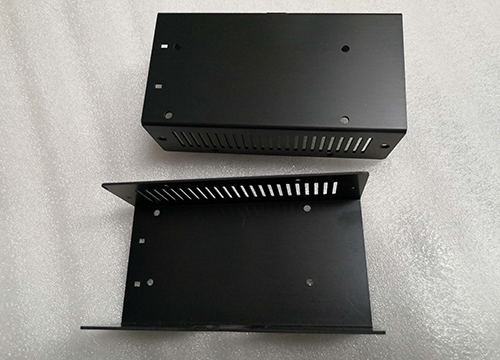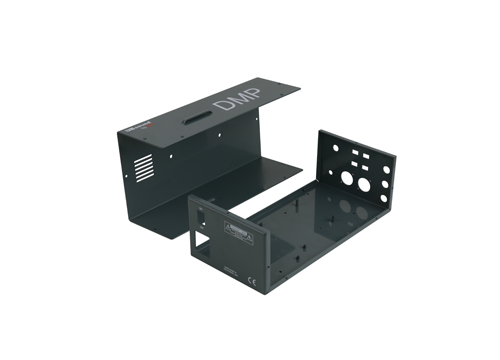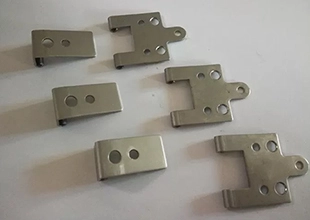

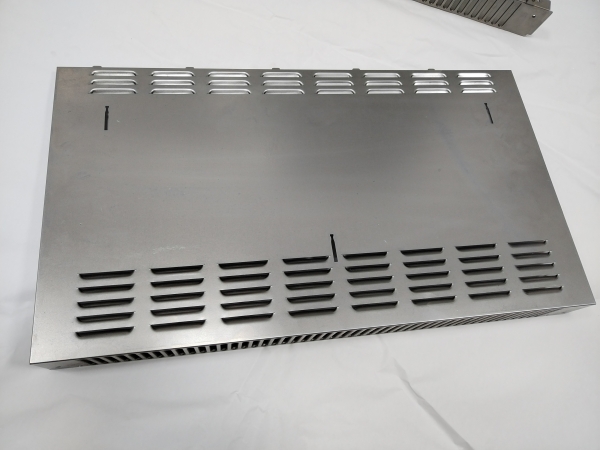
In the sheet metal manufacturing industry, simple bent parts are already commonplace, and many components can no longer meet the demands of modern electronic and industrial control equipment for functional integration and structural complexity. The image below shows a complex ventilation chassis we recently completed; we will analyze its design, manufacturing process, and assembly details for reference.
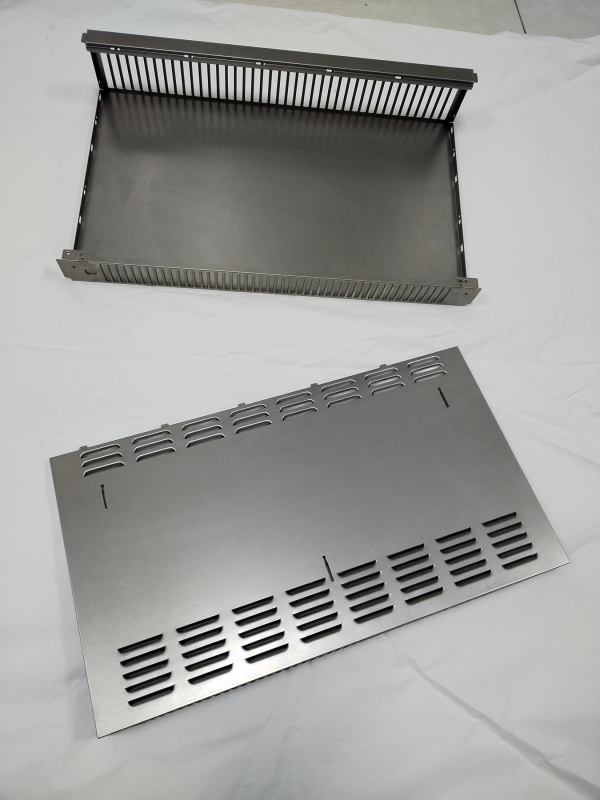
As can be seen from the finished product, this chassis possesses the following typical "complex sheet metal" characteristics:
1. Multi-faceted ventilation structure design
Numerous elongated ventilation holes are evenly distributed on the top and sides.
The ventilation holes adopt a stamped and flanged structure (louvered type).
Balancing heat dissipation performance and structural strength.
2. Integrated bending and forming
The main body is formed by multiple bending after unfolding a single piece.
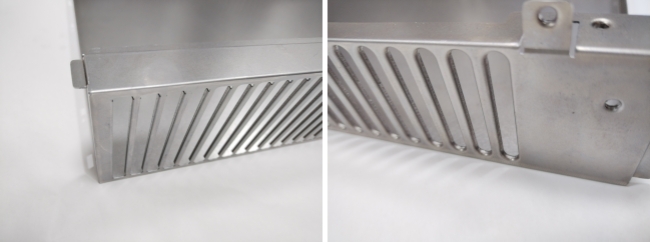
Reinforcing ribs are formed on the sides.
Some areas have mounting ears and positioning holes.
3. Modular Structure (Top Cover + Main Body)
The top cover is an independent stamped part.
It is assembled via snap-fit or screws.
It features a positioning groove structure.
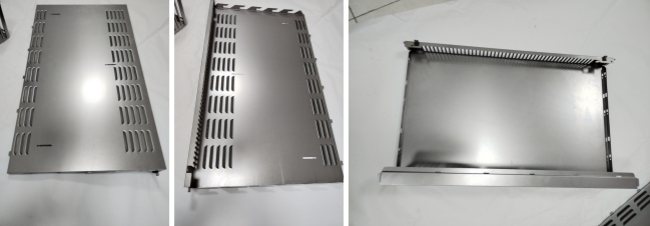
1. CNC punching (NCT) machining
This product features numerous ventilation holes machined using a CNC punching machine:
Using a louver tool
The hole opening and flanging are completed in a single punching operation.
High efficiency, suitable for mass production.
Key control points:
Mold clearance should match material thickness (commonly 1.0~1.5mm).
Stamping direction should be consistent to avoid inconsistent appearance.
Layout optimization should be implemented to reduce material waste.
2. Laser cutting (auxiliary process)
For:
Outer contour
Mounting holes
Irregular openings
Advantages of using laser cutting:
High precision (±0.05mm)
Suitable for complex contours
No mold required
3. Bending Process (Core Challenges)
The bending process for this chassis is complex and requires careful control:
Bending Sequence Design: Fold inwards first, then outwards, avoiding the louvered area.
Key Process Points:
Use segmented bending (to avoid interference)
Use a dedicated lower die (to avoid ventilation holes)
Spring back compensation (typically 0.5°~2°)
4. Deburring and Surface Treatment
Due to the extensive punching and cutting, deburring (using a brush machine or vibratory grinding) is essential to prevent cuts and assembly interference.
Common surface treatment options:
Brushed finish (For more brushing details, please refer to our other blog: Surface treatment of metal - Brushing)
Powder coating
Anodizing (aluminum parts)
The fundamental issue with complex sheet metal is not just manufacturing, but the synergy between design and process:
1. Louver Hole Design Recommendations
Hole spacing ≥ 2 times material thickness
Avoid bending lines (≥ 3T)
Unify direction
2. Bending Avoidance Design
Maintain a safe distance between bending edges and holes
Use slots or process holes to relieve stress
3. Assembly Structure Optimization
Snap-on + screw combinations offer greater stability
Add positioning features (e.g., guide grooves)
As electronic devices evolve towards higher density and miniaturization, complex sheet metal structures will become mainstream. Only by combining design capabilities, manufacturing processes, and on-site experience can high-quality products be manufactured consistently.
If you have similar projects involving complex sheet metal chassis or equipment enclosures, please feel free to contact us. HSJ Team can provide:
Structural optimization suggestions
Process feasibility assessment
Small-batch prototyping and mass production

 English
 日本語
日本語 français
 Deutsch
 Español
 italiano
 русский
 português
 Svenska
 Ελλάδα
 Nederland