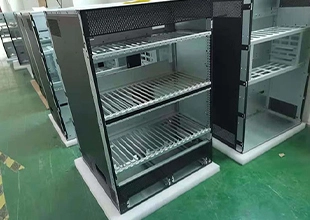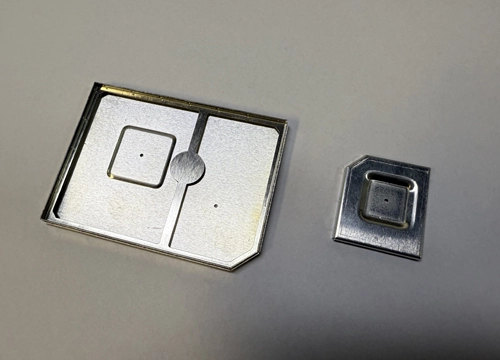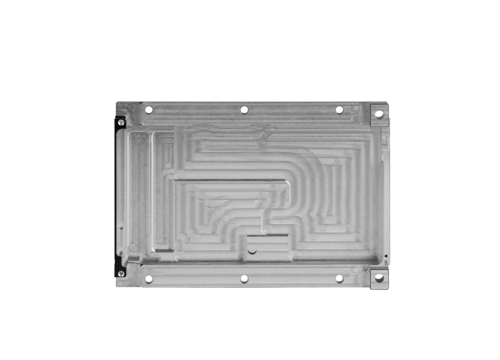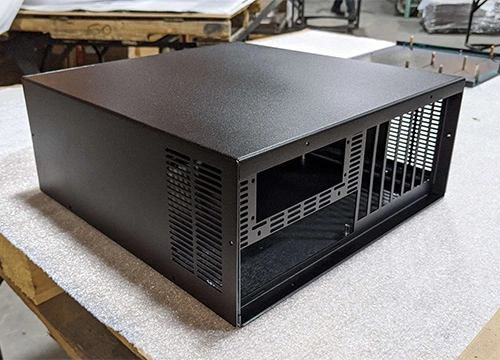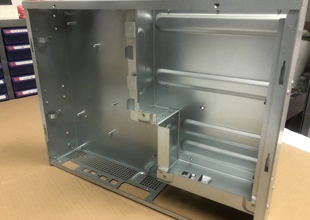

In the fields of mechanical manufacturing, equipment casings, automotive parts, etc., sheet metal parts have become the preferred choice for core structural and exterior components due to their advantages of lightweight, high strength, and flexible forming.
However, during the process of sheet metal parts from sheet metal to finished products, they are easily affected by multiple processes such as cutting, bending, welding, and surface treatment, which can lead to dimensional deviations, forming defects, surface damage, and other issues. A standardized inspection process is the key to controlling the quality of sheet metal parts, reducing rework costs, and ensuring assembly and performance.
The inspection of sheet metal parts is not based on experience and visual inspection, but on standardized documents and professional tools to ensure accurate and reliable inspection results.
1. Core basis sorting
Before inspection, three types of documents must be clearly defined to avoid inspection without evidence:
Drawing files: 2D drawings of parts (including dimension annotation, tolerance requirements, form and position tolerances), 3D models (used for verifying complex structural dimensions);
Technical standards: Product specific technical requirements (such as surface treatment grade, welding specifications), industry general standards (such as sheet metal dimensional tolerance grade, surface roughness specifications);
Inspection documents: Inspection guidebook, inspection record sheet, sampling plan (such as GB/T 2828.1 Sampling Standard).
2. Classification of essential inspection tools
According to different inspection items, tools with different accuracies need to be equipped, classified from low to high accuracy:
Tool Type | Common Tools | Applicable Inspection Items | Precision Requirements |
Basic measuring tools | Steel ruler, tape measure, feeler gauge | Appearance defects, simple gaps, contour dimensions | 0.5mm/1mm |
Precision measuring tools | Vernier caliper, micrometer | Aperture, shaft diameter, thickness, critical dimensions | 0.01mm/0.001mm |
Geometric tolerance tool | Dial gauge, micrometer, square ruler, plug gauge | Parallelism, perpendicularity, flatness, coaxiality | 0.01mm |
Special tool | Sheet metal samples, gauges, roughness meters | Complex surfaces, surface roughness | Roughness Ra0.025 μm |
Auxiliary tool | Strong flashlight, magnifying glass, marker pen | Minor surface defects, defect markings | - |
At the same time, it is necessary to ensure that the inspection environment meets the requirements: the temperature is controlled at 20 ℃± 5 ℃ (to avoid thermal expansion and cold cable affecting the size), the light is sufficient (without direct sunlight), and the inspection table is flat and free of debris.
The inspection of sheet metal parts should cover three stages: incoming inspection, process inspection, and finished product inspection. The core focus is on five dimensions: dimensional accuracy, form and position tolerances, appearance quality, welding quality, and surface treatment quality. The inspection methods for each item are as follows:
1. Dimensional accuracy inspection: Control core dimensions and tolerances
Dimensional accuracy is the foundation of sheet metal part assembly, and it is necessary to focus on checking the key dimensions marked on the drawings (such as aperture, groove width, side length, bending side length), while paying attention to non marked fitting dimensions.
Linear dimension inspection: Use steel rulers and tape measures to inspect large-sized parts (such as the external dimensions of frame sheet metal parts), and measure high-precision dimensions (such as aperture and threaded bottom hole) with vernier calipers and micrometers. Measure each dimension three times, take the average, and compare whether it is within the tolerance range of the drawing;
Thickness inspection of sheet metal: Use a micrometer to measure the thickness of the sheet metal, focusing on measuring the edges, center, and other three positions of the sheet metal to avoid uneven local thickness. The thickness deviation should meet the requirements of the drawing or standard (usually ± 0.1mm~± 0.3mm);
Aperture/slot width inspection: Use a plug gauge (through gauge+stop gauge) to quickly inspect the threaded bottom hole and mating hole to ensure that the aperture meets the tolerance requirements; Measure the width of non-standard holes and grooves with a vernier caliper, and pay attention to the deviation of the center position of the holes/grooves during measurement.
2. Geometric tolerance inspection: ensuring the assembly and usability of parts
Geometric tolerances reflect the shape and positional deviations of parts, directly affecting the assembly smoothness and structural stability of parts. Common items and inspection methods are as follows:
Verticality inspection: Place the square ruler tightly against the reference surface of the sheet metal part (such as the bending surface, installation surface), measure the gap between the measured surface and the square ruler with a feeler gauge, and determine whether the verticality meets the requirements; Complex parts can be measured with a dial gauge and a rotating platform to determine the deviation value after one rotation;
Flatness inspection: For flat parts, place the part on a flat inspection table, measure the gap between the edge of the part and the inspection table with a feeler gauge, or measure each point on the surface of the part with a dial gauge to calculate the flatness error;
Parallelism/coaxiality inspection: Parallelism can be measured by fixing the part on a rotating platform and measuring the runout value of the measured surface with a dial gauge; Coaxiality is tested for shaft and hole parts using specialized gauges (such as axial gauges) or coordinate measuring instruments.
3. Appearance quality inspection: eliminate surface defects that affect use
The appearance quality is directly related to the aesthetics and service life of sheet metal parts. It needs to be inspected by visual inspection and auxiliary tools (magnifying glass) under sufficient light, with a focus on identifying the following defects:
Surface damage: scratches, bumps, dents, burrs (especially at bends and hole edges), requiring no obvious damage to the surface. Minor scratches must meet the surface grade requirements (such as no scratches on A-level surfaces, and no scratches on B-level surfaces with a length of ≤ 10mm and a quantity of ≤ 2);
Board defects: rust, oxide scale, bubbles, and inclusions on the surface of the board, requiring the raw material to be free of rust and obvious surface defects;
Molding defects: cracks, wrinkles, and deformation at bends, welding slag, spatter, and deformation at welds. It is required that there are no cracks at bends and no obvious spatter at welds.
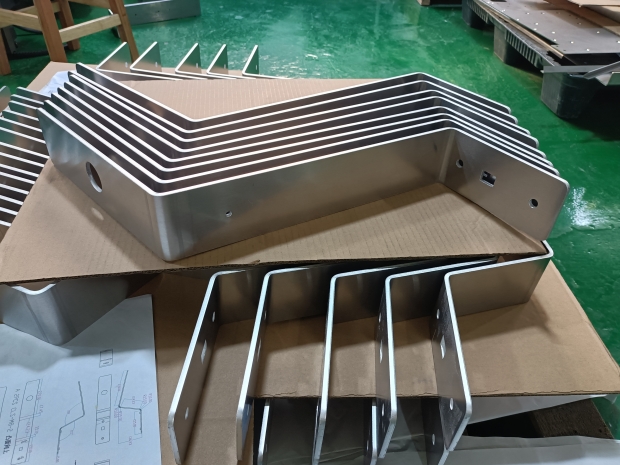
4. Welding quality inspection: special inspection for welded sheet metal parts
For welded sheet metal parts (such as chassis, cabinets, frames), welding quality is the core and needs to be inspected from three dimensions: appearance, strength, and sealing:
Appearance inspection: visually inspect the weld seam, requiring it to be formed smoothly and continuously, without defects such as slag inclusion, porosity, cracks, lack of penetration, lack of fusion, etc; The width and height of the weld seam are uniform and comply with the welding specifications on the drawing;
Strength testing: Destructive testing (such as tensile testing) or non-destructive testing (such as ultrasonic testing, penetrant testing) should be conducted on important welding parts to verify the strength and density of the welded joint;
Sealing test: For welded sheet metal parts that need to be sealed (such as water tanks and oil tanks), the immersion method or air pressure method is used for inspection: the immersion method immerses the parts in water, introduces compressed air, and observes whether there are bubbles emerging; Fill the parts with air at a specified pressure using the pneumatic method, maintain the pressure for a certain period of time, and if the pressure does not decrease, it is considered qualified.
5. Surface treatment quality inspection: ensure corrosion resistance and aesthetics
Common surface treatments for sheet metal parts include painting, galvanizing, passivation, spraying, etc. The inspection focuses are as follows:
Painting/spraying inspection: visually inspect the uniformity of the coating color, use the hundred grid method (draw 10 × 10 small squares, apply tape and tear) to test the adhesion of the coating, and require no peeling, no bubbles, no sagging, and no pinholes; Measure the surface roughness of the coating with a roughness meter, which meets the requirements of the drawing;
Galvanization/Passivation Inspection: Observe the thickness of the coating (measured with a coating thickness gauge), requiring the coating to be uniform, without missing plating, and without rust spots; The passivation film should be uniform and free of discoloration, and its corrosion resistance can be tested by salt spray test (such as neutral salt spray test for ≥ 48 hours without corrosion);
Consistency inspection of surface treatment: The surface treatment effect of the same batch of parts should be consistent, without local color difference, local omission of treatment and other issues.
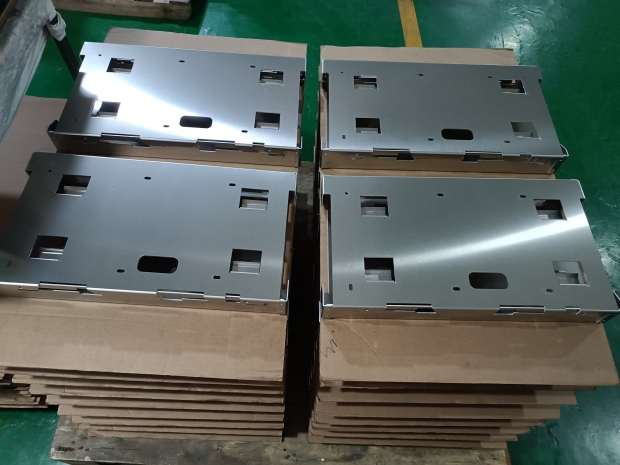
The quality of sheet metal parts directly determines the performance and reliability of the entire machine. From rigorous inspection preparation, to meticulous core project testing, to precise defect response, every step is related to the final quality. For sheet metal processing enterprises, inspection is not the "last process", but a "quality defense line" that runs through the entire production process. Only by standardizing and refining inspection can we continuously improve the quality of sheet metal parts and meet the market's demand for high-precision and high-performance products.

 English
 日本語
日本語 français
 Deutsch
 Español
 italiano
 русский
 português
 Svenska
 Ελλάδα
 Nederland