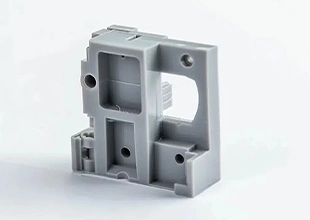

Industrial electrical enclosures are not simply metal boxes for protecting electrical components. Their material, dimensions, ingress protection, mounting arrangement, cable entries, ventilation, sealing, surface finish, and assembly details all influence how reliably the finished enclosure performs in its operating environment.
That is why a complete RFQ is an important part of electrical enclosure fabrication. If critical requirements are missing from the drawings or specification, a fabricator may have to make assumptions about sheet thickness, gasket construction, cable openings, mounting hardware, or finishing. Those assumptions can lead to redesigns, quotation revisions, additional machining, or a finished enclosure that does not match the application's requirements.
For OEMs, system integrators, electrical equipment manufacturers, and industrial automation companies, effective electrical enclosure manufacturing starts with a clear definition of what the enclosure needs to protect and how it will be installed. The following checklist explains what should be specified before requesting a quotation.
The operating environment should be established before selecting materials or finalizing the enclosure structure. An enclosure installed inside a clean control room has very different requirements from one exposed to outdoor weather, dust, moisture, chemicals, vibration, or industrial contaminants.
Start by identifying where the enclosure will be installed and what environmental conditions it will encounter. Relevant considerations may include indoor or outdoor installation, exposure to rain or condensation, dust, oil, chemicals, salt spray, temperature changes, vibration, and physical impact.
Ingress protection is another important requirement. If an enclosure needs an IP rating, the target rating should be stated explicitly in the RFQ and supported by an appropriate enclosure design. The required protection level affects doors, seams, gaskets, cable entries, ventilation, fasteners, and other openings.
It is also important to distinguish between an enclosure's intended protection level and a general statement such as "waterproof" or "dustproof." A recognized protection classification provides a much clearer manufacturing target than an informal description.
| Requirement | What the RFQ Should Define | Why It Matters |
|---|---|---|
| Installation environment | Indoor, outdoor, washdown, industrial, corrosive, etc. | Influences material, sealing and finish |
| Ingress protection | Required IP classification, where applicable | Determines sealing and opening requirements |
| Impact exposure | Expected mechanical or operational hazards | Influences enclosure construction and material |
| Temperature | Expected operating and storage conditions | Affects material, seals and thermal management |
| Corrosion exposure | Chemicals, humidity, salt or other contaminants | Influences material and surface treatment |
For applications with regulatory or industry-specific requirements, the applicable standards should also be identified before quotation. This prevents the fabricator from designing toward an unspecified or incorrect compliance target.
Material selection is one of the most important decisions in electrical enclosure fabrication because the enclosure must balance strength, manufacturability, corrosion resistance, weight, thermal behavior, and cost.
Common enclosure materials include carbon steel, stainless steel, and aluminum. The right choice depends on the operating environment and application rather than on material preference alone.
Carbon steel can be suitable for many industrial indoor applications, particularly when an appropriate protective coating is applied. Stainless steel is frequently considered when corrosion resistance, hygiene, or demanding environmental conditions are important. Aluminum can provide a useful combination of low weight, corrosion resistance, and manufacturability for suitable applications.
The RFQ should identify the specific material grade whenever the grade is important to performance or procurement. Simply specifying "steel enclosure" may leave too many variables open.
Sheet thickness should also be specified or clearly established through the engineering drawing. Thickness influences rigidity, weight, bend behavior, mounting strength, welding requirements, and the ability of the enclosure to support installed components.
However, choosing an unnecessarily heavy sheet does not automatically produce a better enclosure. A fabricator can often optimize the structure through bends, folds, reinforcement, mounting rails, and other design features. For this reason, OEM buyers can benefit from discussing manufacturability with the supplier before locking the final specification.
HSJ Fabrication provides sheet metal fabrication capabilities covering processes such as laser cutting, bending, welding, and assembly. Reviewing its fabrication products and manufacturing capabilities can help OEM buyers understand the available routes for producing custom industrial enclosures.
A fabrication drawing should contain enough information for the manufacturer to build the enclosure without making assumptions about critical interfaces.
Overall length, width, and height are fundamental, but they are only the starting point. The drawing should also define door openings, panel dimensions, flange dimensions, bend locations, internal clearances, and any space needed for electrical components.
Mounting points require particular attention. The location and size of mounting holes, brackets, rails, standoffs, hinges, handles, locks, and internal mounting plates should be clearly defined. If the enclosure interfaces with an existing machine or cabinet, the mating dimensions should be identified as critical.
Cable entries are another frequent source of RFQ ambiguity. Specify the number, location, size, and type of cable entry required. Depending on the application, the design may use cable glands, conduit fittings, knockouts, bulkhead connectors, or custom cutouts.
Do not assume that cable openings can be moved later without consequences. Their location may affect internal wiring space, gasket placement, structural strength, drainage, and installation access.
For removable panels or doors, the drawing should also identify hinge orientation and opening direction. If the enclosure must be accessible from a particular side, this should be stated rather than left to interpretation.
When a component must be installed inside the enclosure, provide its dimensions and clearance requirements where relevant. Electrical enclosure manufacturing becomes much more predictable when the fabricator understands not only the outer dimensions but also the functional space required inside.
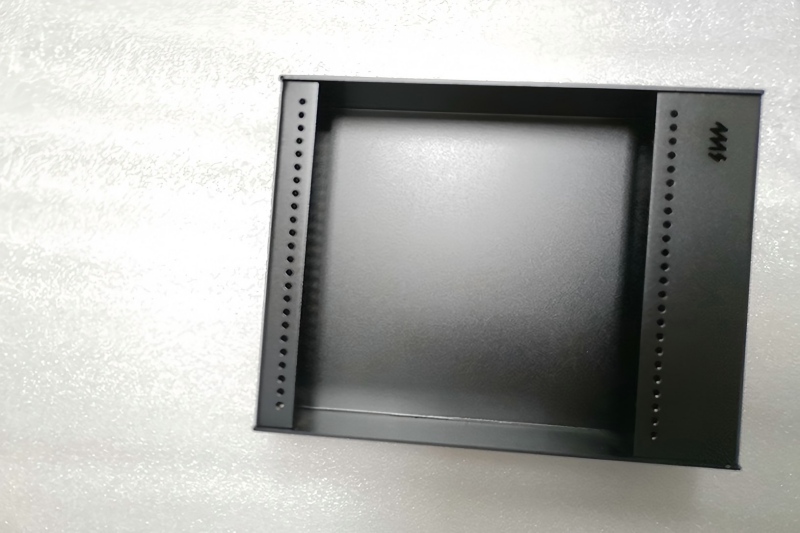
Thermal management can significantly affect enclosure design. Electrical and electronic components generate heat, and a sealed enclosure can restrict natural heat dissipation. If the application requires ventilation, cooling fans, filters, louvers, heat exchangers, or other thermal-management components, these requirements should be established before fabrication.
Ventilation openings also affect environmental protection. A ventilated enclosure cannot be treated in the same way as a completely sealed enclosure. The opening design, filter arrangement, airflow path, and required protection level should therefore be considered together.
Gaskets are equally important when a door or removable panel must maintain environmental protection. The RFQ should identify whether a gasket is required, where it is installed, and whether there are requirements for gasket material, compression, replacement, or chemical compatibility.
Welding requirements should also be specified where applicable. A fabricated enclosure may use welded seams, brackets, studs, hinges, reinforcement pieces, or mounting structures. If weld appearance is important, specify the relevant cosmetic requirements. If structural integrity is the primary concern, identify the functional weld requirements instead.
Assembly details should be included as early as possible. For example, determine whether the supplier is expected to install hinges, handles, locks, threaded inserts, studs, mounting plates, hardware, gaskets, or other components.
This distinction matters because electrical enclosure fabrication and complete enclosure assembly are not always the same scope. A supplier may quote the sheet metal enclosure only unless assembly requirements are clearly included in the RFQ.
Surface finish should be treated as a manufacturing specification rather than an afterthought. The appropriate finish depends on corrosion exposure, appearance requirements, cleaning requirements, wear conditions, and the base material.
For painted carbon-steel enclosures, the RFQ should define the coating system or relevant coating specification where required. Color should be identified using a recognized color reference when appearance consistency matters.
For stainless steel, the required surface appearance may include a specified finish or treatment depending on the application. Aluminum enclosures may use anodizing, powder coating, or another appropriate finish.
The RFQ should also clarify whether the finish applies to all exposed surfaces or only specific areas. If machined surfaces, threaded holes, grounding points, or electrical contact areas must remain uncoated, those areas should be identified on the drawing.
Surface preparation can be equally important. Cleaning, deburring, edge treatment, pretreatment, coating, and curing can all influence the final result. A complete electrical enclosure manufacturing specification should therefore address both the visible finish and any functional surface requirements.
A strong RFQ gives the manufacturer enough information to evaluate manufacturability, material requirements, production processes, finishing, assembly, inspection, and packaging.
At minimum, an industrial enclosure RFQ should normally include the following information:
2D engineering drawing with dimensions and tolerances
3D CAD model when available
Material grade and sheet thickness
Overall enclosure dimensions
Critical mounting holes and interfaces
Door, hinge, handle and lock requirements
Cable entry locations and specifications
Ventilation or cooling requirements
Gasket and sealing requirements
Welding and assembly requirements
Surface finish and color requirements
Required quantity and expected production frequency
Applicable inspection or quality requirements
Packaging and delivery requirements
It is also useful to identify which dimensions are functionally critical. Not every enclosure dimension needs the same tolerance. Clearly identifying critical interfaces allows the supplier to focus process control and inspection resources where they matter most.
For production projects, buyers should provide the expected annual or recurring volume when possible. The appropriate fabrication strategy can differ between a one-time prototype and a repeat production program.
HSJ Fabrication's manufacturing workflow covers multiple sheet metal processes, allowing enclosure projects to incorporate cutting, forming, welding, finishing, and related fabrication operations as required. Providing the complete drawing package at the RFQ stage gives the manufacturer a stronger basis for evaluating the production route.
If your design is ready for quotation, you can contact HSJ Fabrication with your drawings, material requirements, quantities, and enclosure specifications so the project can be evaluated against the required fabrication process.
A successful industrial electrical enclosure is determined by more than its external dimensions. Environmental protection, material, sheet thickness, mounting interfaces, cable entries, ventilation, sealing, welding, assembly, and surface finish all need to be considered before production begins.
For OEM buyers, a detailed RFQ reduces assumptions and makes supplier quotations easier to compare. It also gives the fabricator enough information to identify potential manufacturing issues before material is cut.
Effective electrical enclosure fabrication therefore starts with a complete technical definition. When drawings and specifications clearly communicate the enclosure's operating environment, functional requirements, and production expectations, electrical enclosure manufacturing becomes more predictable in terms of quality, cost, and delivery.
The most important information includes the enclosure dimensions, material and thickness, critical tolerances, mounting features, cable entries, environmental requirements, surface finish, quantity, and assembly requirements.
Carbon steel, stainless steel, and aluminum are common choices. The appropriate material depends on corrosion exposure, mechanical requirements, weight, thermal considerations, and the installation environment.
Yes. If an IP classification is required, it should be explicitly stated because it affects doors, gaskets, openings, cable entries, ventilation, and the overall enclosure design.
Cable entries affect internal wiring space, sealing, structural integrity, installation access, and component layout. Their locations should therefore be defined on the engineering drawing whenever possible.
Yes. The RFQ should identify the required coating or finish, color where applicable, surface preparation requirements, and any areas that must remain uncoated for electrical or mechanical reasons.
HSJ Fabrication offers sheet metal processes including laser cutting, bending, welding, and related fabrication capabilities, allowing OEM enclosure projects to combine multiple manufacturing operations within one production workflow.

 English
 日本語
日本語 français
 Deutsch
 Español
 italiano
 русский
 português
 Svenska
 Ελλάδα
 Nederland