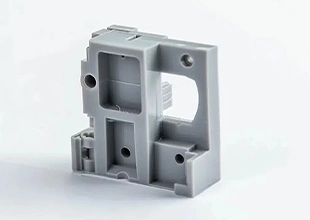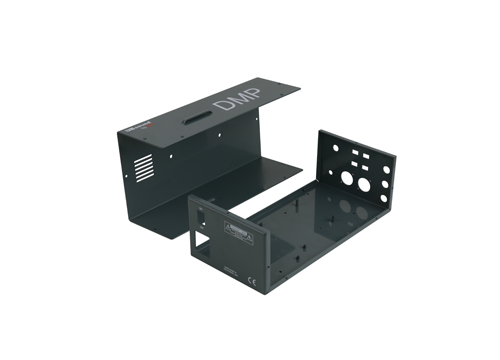

Tolerance refers to the allowable dimensional error range of a part during the processing or assembly process. It is not an "error" but a reasonable range specified in advance during the design.

For example, if a cylinder with a diameter of 50 mm is machined, the finished diameter is unlikely to be exactly 50 mm. This is because, just as scissors produce slight deformation when cutting along a straight line, machining also introduces slight errors.
Furthermore, thermal expansion and contraction of the material and the machine due to temperature, as well as inherent material variations, also contribute to errors in the finished product. Therefore, while we can machine with a target of 50 mm, it is unlikely that the finished product will be exactly 50 mm.
Therefore, during the design process, we must decide how much error we can tolerate. The design drawings and processing drawings define the range of error allowed in the design as "tolerance."Generally speaking, the larger the material, the greater the tolerance.
1. Dimensional Tolerances
Control the allowable deviations in length, width, and thickness.
For example: ±0.2 mm for the long side of a cut sheet.
2. Geometric tolerances
Control the errors in a part's shape and position.
These include flatness, perpendicularity, parallelism, and coaxiality.
3. Angle tolerance
For bent parts, for example, a 90° bend allows ±1°.
4. Assembly tolerances
Ensure the precise fit of multiple parts after assembly, for example, ensuring that snaps fit smoothly and screw holes align.
Tolerance is important because it directly impacts sheet metal assembly accuracy, product performance, and manufacturing costs. Excessively large tolerances can lead to misaligned holes and loose assembly, resulting in functional failure. However, excessively small tolerances increase processing difficulty and testing costs, impacting production efficiency. Proper tolerance control not only ensures component interchangeability and longevity but also strikes a balance between quality and cost, making it an essential and critical step in sheet metal manufacturing.
1. Setting Tolerances Reasonably During the Design Phase
Don't blindly demand "smaller is better"; instead, set an appropriate tolerance range based on functional requirements. If the tolerances of each component are designed too tightly, costs will increase accordingly. If the tolerances are designed too loosely, the possibility of failure will increase.
Tolerance design refers to setting tolerances by comprehensively considering factors such as product quality and cost. Once you master tolerance design and tolerance calculation, you can improve quality without increasing costs, and reduce costs while ensuring quality.
Decorative panels can tolerate ±0.5 mm, while precision electronic chassis holes require ±0.1 mm.
2. Matching Process Selection with Tolerances
Laser Cutting → Generally achieves ±0.1-0.2 mm.
CNC Bending → Angle tolerances are generally ±1°.
Tolerance is not just an insignificant decimal point; it's a crucial factor in determining the smooth processing, assembly, and use of sheet metal parts. Properly setting tolerances ensures product quality while effectively controlling costs, making it a crucial step for design and manufacturing engineers.
Remember this: Too loose tolerances result in inaccurate products; too tight tolerances result in excessive costs. Only reasonable tolerances offer the optimal solution.

 English
 日本語
日本語 français
 Deutsch
 Español
 italiano
 русский
 português
 Svenska
 Ελλάδα
 Nederland