
Choosing the right manufacturing process for custom aluminum parts can have a major impact on part cost, dimensional accuracy, structural performance, lead time, and long-term production efficiency. For OEM buyers, the decision is rarely as simple as choosing between CNC machining and sheet metal fabrication based on the material alone.
Both processes can produce high-quality aluminum components, but they are suited to different geometries, thicknesses, tolerances, quantities, and assembly requirements. CNC machining removes material from a solid billet or block, while sheet metal fabrication typically cuts and forms aluminum sheet into the required shape.
For custom aluminum parts, the better process depends on what the component needs to do rather than which process appears more advanced. This guide explains when custom aluminum parts machining makes sense, when sheet metal fabrication is more economical, and when combining both processes can create a better OEM solution.
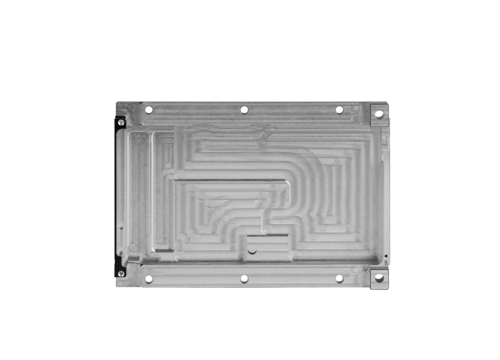
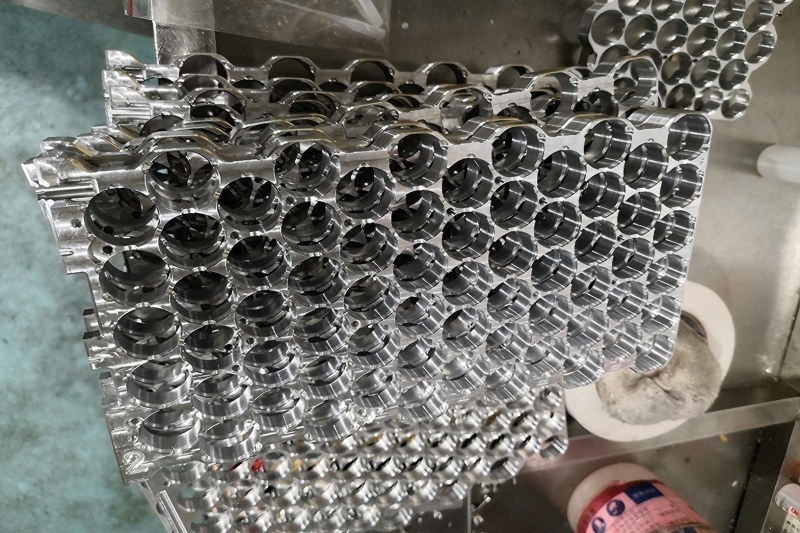
CNC machining is generally the stronger option when a custom aluminum part requires complex three-dimensional geometry, precise interfaces, tight dimensional control, or features that are difficult to produce through bending and forming.
Typical CNC-machined aluminum features include precision bores, threaded holes, pockets, slots, curved surfaces, mounting interfaces, and complex contours. CNC machining is also useful when several critical features must maintain accurate relationships to one another.
For example, an aluminum housing may require a precisely positioned bearing bore, mounting holes, sealing surface, and internal pocket. Producing these features from billet aluminum through CNC machining can provide greater geometric freedom than fabricating the same component from flat sheet.
Another important consideration is prototype development. CNC machining can be practical when an OEM needs functional prototypes without investing in dedicated forming or stamping tooling. Once the design has been validated, the manufacturing strategy can be reassessed according to production volume.
HSJ provides CNC custom aluminum parts manufacturing using materials including 5052, 6061, 6063, 2017, and 7075 aluminum alloys, depending on project requirements. Its published CNC aluminum parts information also specifies a typical tolerance of ±0.1 mm for one of its custom aluminum part offerings, although the achievable tolerance for a particular feature should always be confirmed from the drawing and manufacturing process.
For OEM projects involving precision components, buyers can review the full range of HSJ fabrication products to evaluate CNC machining and other available manufacturing options.
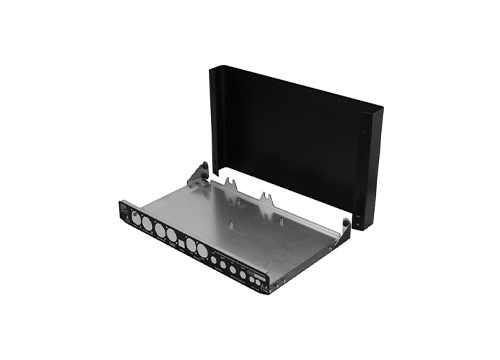
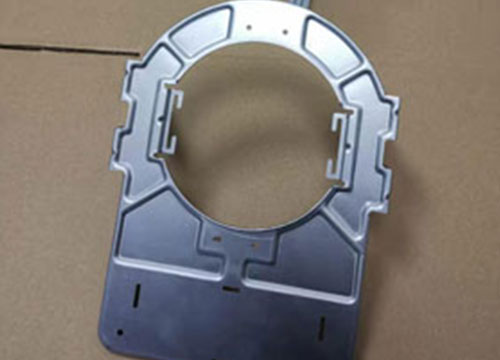
Sheet metal fabrication is often more efficient when the design consists primarily of flat surfaces, bends, flanges, brackets, panels, covers, chassis, or enclosures.
Instead of removing a large amount of material from a solid block, the manufacturer cuts the required profile from aluminum sheet and then forms it into shape. This can significantly reduce material removal and machining time for suitable geometries.
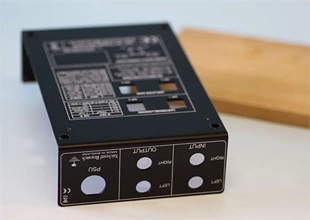
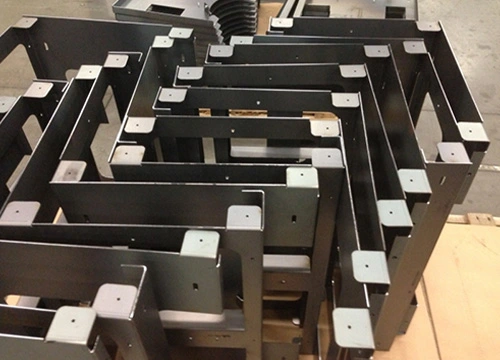
Sheet metal fabrication is particularly attractive for components such as electrical enclosures, equipment panels, brackets, cabinets, chassis, protective covers, and structural frames. These products often need relatively thin walls and large surface areas rather than complex three-dimensional machined features.
The design of the part is critical. A flat blank with several controlled bends may be much more economical to manufacture than a solid billet component that requires extensive CNC material removal.
HSJ's product range includes laser cutting, sheet metal bending, stamping, welding, chassis, and cabinet fabrication. Its website describes sheet metal chassis as components produced through cold-working processes such as shearing, punching, and cutting, while bending converts flat sheet into three-dimensional forms.
For OEM buyers, sheet metal can therefore be the better route when the primary requirements are low material usage, efficient forming, relatively thin construction, and scalable production.
Geometry is one of the most important factors when selecting a manufacturing process for custom aluminum parts.
| Design Requirement | CNC Machining | Sheet Metal Fabrication |
|---|---|---|
| Complex 3D contours | Well suited | Usually limited |
| Precision bores and pockets | Well suited | Usually requires secondary machining |
| Large flat panels | Often inefficient | Well suited |
| Thin bent walls | Usually inefficient | Well suited |
| Integrated mounting features | Excellent flexibility | Possible through forming, inserts, or welding |
| Very tight feature-to-feature relationships | Generally easier to control | Requires careful forming and process control |
| Enclosures and cabinets | Usually excessive material removal | Often more efficient |
Wall thickness also changes the manufacturing logic. Very thin sections can be difficult or inefficient to produce by conventional CNC machining because they may deflect during cutting. Sheet metal, by contrast, is specifically designed around thin-gauge material that can be cut and bent into shape.
However, sheet metal is not automatically the answer for every thin component. The required bend radius, hole location, flange dimensions, material temper, and forming sequence all need to be considered.
Tolerance is another major differentiator. CNC machining is generally better suited to precise holes, mating surfaces, bearing seats, and other critical features. Sheet metal fabrication can achieve good repeatability, but bending introduces factors such as springback, material variation, bend direction, and accumulated dimensional effects.
The correct approach is therefore to specify tolerances by feature importance rather than assigning unnecessarily tight tolerances to the entire component. This can prevent unnecessary manufacturing costs while preserving the performance of the finished product.
Production volume can change which process represents the better commercial choice.
For low-volume prototypes, CNC machining can be attractive because the process can move directly from a CAD model and engineering drawing to a machined component without dedicated forming tooling. This makes it useful for design verification, functional testing, and early-stage OEM development.
Sheet metal can also be highly competitive for prototypes when the geometry is naturally suited to cutting and bending. A simple bracket or enclosure may require only cutting and bending operations, making CNC machining unnecessarily expensive.
At higher volumes, the calculation becomes more complicated. The buyer should consider material utilization, cycle time, tooling, secondary operations, inspection, finishing, assembly, and scrap rather than comparing machining and fabrication based only on the quoted unit price.
CNC machining can become expensive when a large billet must be reduced substantially to create the final shape. Sheet metal can offer a material-efficient alternative when the design can be developed from a flat blank.
On the other hand, a highly complex part may require multiple sheet metal operations, welding, inserts, and secondary machining. In that situation, a single CNC-machined component may reduce assembly complexity even if its initial machining cost is higher.
HSJ states that its manufacturing services cover both prototyping and repeat production, with CNC machining, laser cutting, bending, welding, finishing, assembly, and testing available within its broader fabrication capabilities.
Yes. In many OEM projects, the most practical solution is not CNC machining versus sheet metal fabrication, but CNC machining plus sheet metal fabrication.
A complex assembly may use a bent aluminum enclosure for the main structure while using CNC-machined aluminum blocks for precision mounting points, brackets, heat-transfer interfaces, or mechanical connection features.
This hybrid approach can reduce the amount of material that needs to be machined while retaining precision where it actually matters.
For example, an equipment enclosure could be laser cut and bent from aluminum sheet, while the mounting interface for a motor or bearing could be produced as a separate CNC-machined component. The two parts can then be joined using fasteners, inserts, welding, or another specified assembly method.
Hybrid manufacturing is particularly useful when different sections of the product have fundamentally different requirements. Large structural surfaces do not necessarily need CNC machining, while precision interfaces may benefit from it.
For OEM buyers, this approach can also make design revisions easier. Instead of redesigning an entire machined housing, engineers may be able to modify a smaller precision component while retaining the sheet metal structure.
A well-prepared RFQ helps suppliers select the appropriate manufacturing process and reduces unnecessary quotation revisions. For custom aluminum parts, OEM buyers should provide enough information for the manufacturer to evaluate both technical requirements and production economics.
The drawing or 3D CAD model should define the overall geometry, critical dimensions, tolerances, hole specifications, threads, radii, and other functional features. The material grade and temper should also be specified whenever they are important to mechanical performance or forming behavior.
Quantity is equally important. A supplier evaluating one prototype may recommend a different process from the one used for thousands of production parts.
The RFQ should also identify surface-finish requirements such as anodizing, powder coating, brushing, or other treatments. Appearance requirements should be separated from functional requirements whenever possible so that the supplier can determine the most efficient finishing route.
OEM buyers should also communicate assembly requirements, inspection expectations, packaging requirements, target application, and delivery expectations. If certain dimensions are critical to function, identify them clearly rather than applying unnecessarily tight tolerances to every dimension.
HSJ's quotation interface specifically asks customers to provide design files and relevant information such as material, surface finishing, and quantity. The company accepts common engineering file formats including STEP, STP, PDF, DXF, and CAD files.
If your project involves multiple custom aluminum parts or you are uncertain whether CNC machining, sheet metal fabrication, or a hybrid approach is appropriate, you can contact HSJ Fabrication with your drawings and production requirements for a manufacturing assessment.
The choice between CNC machining and sheet metal fabrication should be based on part geometry, tolerance requirements, wall thickness, quantity, material utilization, assembly requirements, and total manufacturing cost.
CNC machining is generally appropriate for complex three-dimensional components, precision interfaces, and features that require controlled dimensional relationships. Sheet metal fabrication is often more efficient for thin panels, brackets, chassis, covers, and enclosures formed from flat aluminum sheet.
For many OEM applications, the strongest solution may be a combination of both. Using sheet metal where large structural surfaces are required and CNC machining where precision features matter can balance performance, cost, and manufacturability.
Ultimately, successful custom aluminum parts machining starts before production begins. A complete RFQ, realistic tolerances, clearly defined material requirements, and early communication with the manufacturer can help OEM buyers select a process that fits both the engineering requirements and the commercial objectives of the project.
Neither process is universally better. CNC machining is generally better for complex geometries and precision features, while sheet metal fabrication is often more efficient for thin panels, brackets, chassis, and enclosures.
CNC machining generally provides greater control over precision features such as bores, pockets, and machined mounting surfaces. Sheet metal accuracy depends heavily on material, thickness, bend geometry, tooling, and forming conditions.
For complex prototypes, CNC machining can be convenient because it can often proceed directly from CAD data without dedicated forming tooling. For simple brackets or enclosures, laser cutting and bending may be more economical.
It depends on the geometry and production method. Sheet metal can be highly efficient for repeat production of formed parts, while CNC machining can remain appropriate for complex precision components. Material utilization and secondary operations should be included in the cost comparison.
Yes. Combining CNC-machined precision components with laser-cut and bent sheet metal components is a common way to balance dimensional accuracy, structural requirements, material efficiency, and production cost.
A 2D engineering drawing and 3D CAD model are ideal when available. Include the aluminum grade, quantity, critical tolerances, surface finish, assembly requirements, and any inspection or packaging specifications that affect production.

 English
 日本語
日本語 français
 Deutsch
 Español
 italiano
 русский
 português
 Svenska
 Ελλάδα
 Nederland