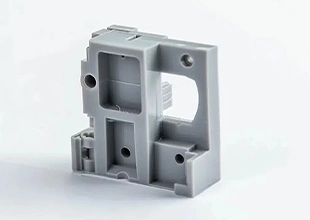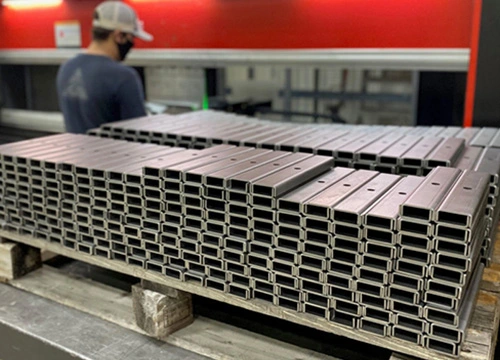

CNC machining, with its advantages of high precision, high consistency, and high efficiency, has become the core machining method in high-end fields such as aerospace, automotive manufacturing, precision instruments, and electronic equipment. However, even with the support of precision CNC equipment, parts are still affected by factors such as tool wear, programming errors, material deformation, and clamping deviations during the machining process, resulting in problems such as dimensional deviations, form and position deviations, and surface defects.
Unlike ordinary sheet metal parts, CNC metal parts are mostly core functional components with stricter requirements for accuracy, surface quality, and mechanical properties. Once inspection is overlooked, it can not only lead to rework and scrap of the parts, but also affect the assembly accuracy of the entire machine and even cause safety hazards.
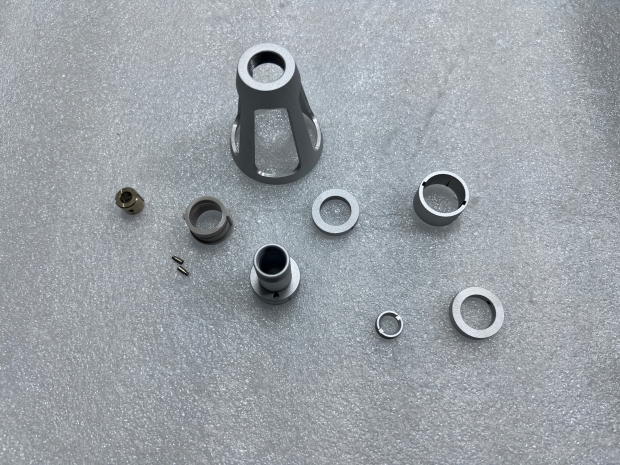
The core of CNC part inspection is "having standards to follow and tools to use". Preparing in advance can avoid misjudgments and omissions during the inspection process, ensuring accurate and reliable inspection results.
1. Clearly define the inspection criteria
Before inspection, it is necessary to sort out complete technical documents and clarify each inspection standard. This is the core prerequisite for inspection work, with a focus on three types of documents:
Design documents: 2D engineering drawings of parts (marking key dimensions, tolerances, form and position tolerances, surface roughness), 3D models (used for verifying complex structures and surface dimensions, especially suitable for polyhedra and irregular parts);
Processing process documents: CNC processing process card (specifying processing procedures, tool parameters, clamping methods), key process inspection requirements (such as special size inspection required after a certain process);
Standard specifications: industry general standards (such as GB/T 1804-2000 tolerance standard, GB/T 1182 geometric tolerance standard), product specific technical requirements (such as surface treatment grade, mechanical performance requirements), sampling plan (during mass production, the sampling ratio is determined according to GB/T 2828.1).
Special attention: The tolerance of CNC parts is mostly IT6-IT8 level (precision level), and some high-end parts even reach IT4-IT5 level. When inspecting, it is necessary to strictly judge according to the tolerance range marked on the drawing, and the standards cannot be relaxed arbitrarily.
The precision requirements for CNC parts are high, and ordinary measuring tools cannot meet the inspection needs. Corresponding precision tools need to be equipped according to the precision requirements of the inspection items. The classification of "basic precision specialized" is as follows:
Tool level | Common Tools | Applicable inspection items | Precision Requirements |
Basic measuring tools | Steel ruler, tape measure, feeler gauge, right angle ruler | Preliminary inspection of external contour dimensions, simple clearances, and verticality | 0.1mm~1mm |
Precision measuring tools | Vernier caliper, micrometer, dial gauge, dial gauge, lever gauge | Key linear dimensions, aperture, shaft diameter, thickness, form and position tolerances (parallelism, perpendicularity) | 0.001mm~0.01mm |
Special tool | Coordinate measuring instrument, projector, roughness meter, hardness tester, thread gauge, plug gauge | Complex surfaces, small dimensions, surface roughness, mechanical properties, thread accuracy | 0.0001mm~0.001mm (three coordinate) |
Auxiliary tool | Strong flashlight, magnifying glass, magnetic seat, inspection platform, clamping fixture | Minor surface defects, part fixation, defect marking | - |
Additional explanation: Before inspection, all measuring tools need to be calibrated to ensure that their accuracy meets the requirements (such as calibrating the zero position of micrometers and regularly calibrating the accuracy of coordinate measuring instruments); At the same time, control the inspection environment, maintain a temperature of 20 ℃± 2 ℃ (to avoid thermal expansion and contraction affecting size measurement), have sufficient light and no direct sunlight, and the inspection table is flat and free of debris.
The inspection of CNC metal parts should cover the entire process of "incoming inspection process inspection finished product inspection", with a focus on five dimensions: dimensional accuracy, form and position tolerances, surface quality, thread accuracy, and mechanical properties. The inspection methods for each project should be in line with practical operations, taking into account both efficiency and accuracy.
1. Dimensional accuracy inspection
Dimensional accuracy is the most fundamental requirement for CNC parts, which directly determines whether the parts can be assembled properly. The key dimensions marked on the drawings (such as fitting dimensions and positioning dimensions) are inspected, and the practical methods are divided into three categories:
Linear dimension inspection: For simple linear dimensions such as length, width, and thickness, those with low precision requirements (IT8 and below) are measured with a vernier caliper, while those with high precision requirements (IT7 and above) are measured with a micrometer; Each dimension needs to be measured three times at different positions, and the average value should be taken to compare the tolerance range on the drawing to avoid single measurement errors. For example, to test the diameter of a shaft with a diameter of 10 ± 0.005mm, a micrometer should be used to measure at the two ends and three positions in the middle of the shaft, all of which should be within the range of 9.995-0.005mm.
Aperture/groove width inspection: Quick inspection of through holes and blind holes using plug gauges (pass gauge+stop gauge). If the pass gauge can pass smoothly and the stop gauge cannot pass, it is considered qualified; Non standard holes and groove widths should be measured using vernier calipers or coordinate measuring instruments, and the depth of the holes and the length of the grooves should be checked to ensure compliance with the drawing requirements. For example, the M8 threaded bottom hole needs to be inspected with a Φ 6.8 plug gauge, and the depth of the bottom hole should be measured with a depth gauge.
Complex dimension inspection: For curved surfaces, irregular structures, and polyhedral parts, ordinary measuring tools cannot measure them, and a coordinate measuring instrument or projector is required; Fix the parts on the measuring table, import the 3D model, automatically measure the dimensions of key points, compare the model deviations, and accurately determine whether they are qualified. For example, irregular structural components in the aerospace field need to be inspected for surface contour using a coordinate measuring instrument.
2. Geometric tolerance inspection
The geometric tolerances (shape tolerances, position tolerances) of CNC parts directly affect the assembly accuracy and performance of the parts. Common items and practical methods are as follows, with a focus on the selection of reference surfaces (which should be consistent with the clamping reference during machining):
Shape tolerance inspection: including flatness, cylindricity, straightness, etc. Flatness inspection: Place the part on a flat inspection platform, measure each point on the surface of the part with a dial gauge, calculate the flatness error, or measure the gap between the part and the platform with a feeler gauge; Cylindricity inspection: Use a dial gauge and a rotating platform to fix the part and rotate it once. Measure the runout value of the cylindrical surface to determine if it meets the tolerance requirements.
Position tolerance inspection: including perpendicularity, parallelism, coaxiality, positional accuracy, etc. Verticality: Use a right angle ruler to closely adhere to the reference plane, use a feeler gauge to measure the gap between the measured surface and the right angle ruler, or use a dial gauge to measure the runout of the measured surface; Coaxiality: For shaft and hole parts, use a coaxiality gauge or coordinate measuring instrument to check whether the centerlines of the two shafts/holes coincide; Position accuracy: For positioning holes and slots, use specialized gauges or coordinate measuring instruments to check the deviation between their actual position and theoretical position.
Attention: The inspection of geometric tolerances must first determine the reference plane, which must be free from damage and deformation, otherwise it may cause distortion of the inspection results.
3. Surface quality inspection
The surface quality of CNC metal parts not only affects the appearance, but also affects the corrosion resistance and wear resistance, especially for precision fitting parts and appearance parts. The surface quality requirements are extremely high, and the inspection method is mainly based on "visual inspection+auxiliary tools":
Surface defect inspection: Under sufficient light, visually inspect with a magnifying glass (10-20 times), focusing on checking for defects such as scratches, bumps, burrs, dents, pores, cracks, etc; For high smoothness parts (such as Ra ≤ 0.8 μ m), a strong flashlight should be used to obliquely shine and observe whether there are fine scratches on the surface. Requirement: There should be no obvious defects, and minor scratches should meet the surface grade requirements (such as no scratches on A-level surfaces, and no scratches on B-level surfaces with a length of ≤ 5mm and a quantity of ≤ 1 scratch).
Surface roughness inspection: Measure with a roughness meter, attach the probe to the surface of the part, read the Ra (arithmetic mean deviation of the contour) value, and compare it with the drawing requirements (such as Ra0.4 μ m, Ra0.8 μ m); For curved surfaces and narrow areas, a portable roughness meter can be used to ensure accurate measurement points.
Surface treatment quality inspection: Common surface treatments for CNC parts include hard chrome plating, zinc plating, passivation, anodizing, spray coating, etc. Inspection focus: uniform coating/plating, no missed plating, no peeling, no color difference; Measure the thickness with a coating thickness gauge, which meets the requirements of the drawing; Corrosion resistance can be tested by salt spray test (such as neutral salt spray test for ≥ 72 hours without corrosion).
4. Thread accuracy inspection
The thread accuracy of CNC machined threaded parts (such as bolts, nuts, and threaded holes) directly affects the reliability of the connection. The inspection focuses on thread size, pitch, profile, and fit accuracy:
Thread size and pitch inspection: Use a thread gauge (pass gauge+stop gauge) for inspection. If the pass gauge can be smoothly screwed in and the stop gauge cannot be screwed in, it is considered qualified; The pitch can be measured using a pitch gauge and compared to the pitch indicated on the drawing (such as M10 × 1.5, with a pitch of 1.5mm).
Tooth shape and fit accuracy inspection: Observe the thread tooth shape with a projector to ensure that the tooth shape is clear, without broken teeth or deformation; For important threaded parts, a fitting test can be conducted by screwing the threaded part into the corresponding fitting part, requiring smooth screwing, no jamming, and no looseness.
5. Mechanical performance testing
For CNC metal parts that bear loads, impacts, and wear (such as shafts, gears, and connecting rods), mechanical performance testing is required to ensure compliance with usage requirements. Common items include:
Hardness test: Measure with a hardness tester (Rockwell hardness tester, Brinell hardness tester), compare the hardness value specified in the drawing according to the material and usage requirements of the part (such as hardness ≥ HRC40 after quenching of 45 # steel); When measuring, three different points should be selected and the average value should be taken.
Tensile/impact testing: For important load-bearing components, sampling is required for tensile testing (to check tensile strength and yield strength) and impact testing (to check toughness), and the test results must comply with industry standards or drawing requirements; Destructive testing should be conducted on the sampled parts to avoid affecting the qualified finished products.
The core of CNC metal parts inspection is "precision, meticulousness, and standardization" - relying on precision tools and technical standards, covering every core inspection item in detail, and standardization runs through the entire inspection process. For precision manufacturing enterprises, inspection is not only about "screening qualified products", but also an important means of "optimizing production processes and enhancing product competitiveness".
Whether it is mass-produced conventional CNC parts or customized high-end precision parts, only by strictly following the inspection process and controlling every detail can we ensure that the accuracy and performance of the parts meet the standards, providing a guarantee for the reliability of the entire machine. With the upgrading of CNC machining technology in the future, inspection methods will continue to be optimized (such as automated inspection and AI visual inspection), but the inspection principle of "based on standards and centered on precision" will always be the core of quality control.

 English
 日本語
日本語 français
 Deutsch
 Español
 italiano
 русский
 português
 Svenska
 Ελλάδα
 Nederland