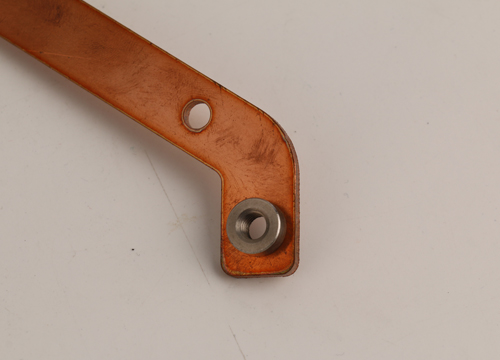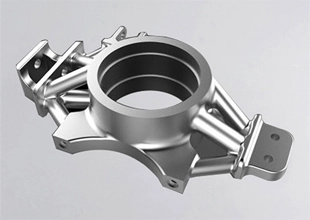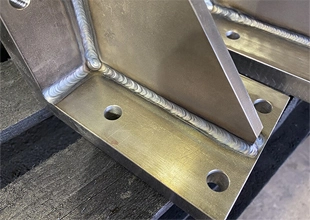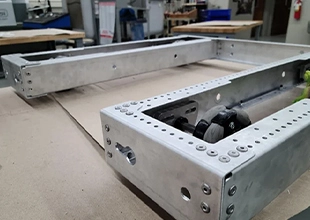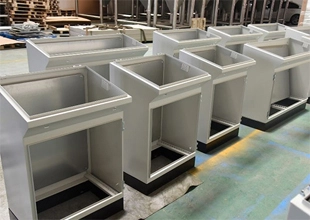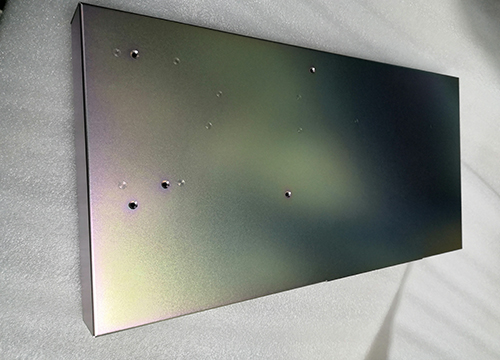

For OEM production, sheet metal pressings are most suitable when consistent parts, high repeatability, and competitive unit costs are required. The key factors affecting project success are tooling design, production volume, material selection, lead time planning, and supplier manufacturing capability.
A reliable supplier should help OEM buyers balance initial tooling investment with long-term production efficiency, especially for applications requiring thousands or millions of identical components.
Sheet metal pressings are ideal for medium to high-volume production where part consistency and cost control are important.
OEM buyers typically choose metal pressing when they need:
Large quantities of identical components
Fast production cycles
Stable dimensional accuracy
Lower unit costs after tooling investment
Repeat production over an extended product lifecycle
Industries such as automotive, electronics, appliances, and industrial equipment commonly use pressed sheet metal parts because stamping processes provide high efficiency and repeatability.
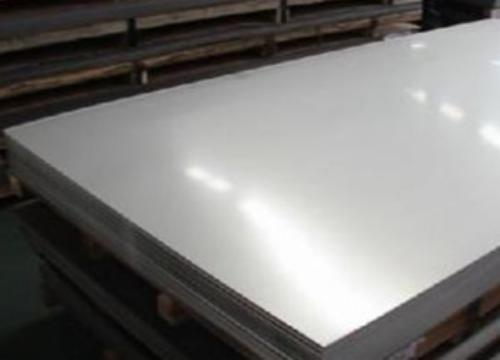
Tooling selection has a major impact on both project investment and production economics.
Common tooling options include:
Single-operation tools: Lower initial cost, suitable for simple parts or lower volumes
Progressive dies: Higher tooling investment but efficient for large-volume production
Compound dies: Combine multiple operations in one press cycle for improved productivity
For automotive metal pressings and other high-volume applications, dedicated tooling often provides the lowest long-term cost per part.
A professional manufacturer should evaluate part complexity, expected volume, and product lifecycle before recommending a tooling solution.
Dedicated tooling is generally suitable when production quantities are high enough to recover the initial tooling investment.
Typical considerations include:
Annual production demand
Expected product lifespan
Part complexity
Material usage
Required production speed
For low-volume projects, flexible tooling or alternative fabrication methods may be more economical. For long-term OEM programs, custom press tooling usually delivers better cost performance and consistency.
Material properties and part design directly affect pressing performance.
Important factors include:
Material thickness and strength
Forming depth
Bend radius
Number of forming operations
Surface requirements
Dimensional tolerances
Materials such as stainless steel, aluminum, and high-strength steels may require different tooling approaches due to differences in formability and springback behavior.
Early design review helps identify potential issues and reduce tooling modifications.
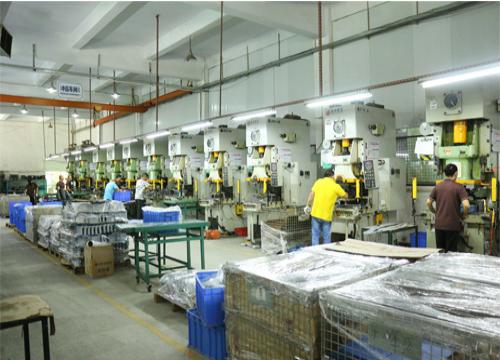
A structured development process reduces production risks.
A typical OEM process includes:
Design review and manufacturability assessment
Prototype or sample development
Tool manufacturing
Tool trial and dimensional inspection
Production approval
Mass production and quality monitoring
During tool trials, manufacturers verify part dimensions, material flow, surface quality, and production stability before moving to full production.
Experienced suppliers of sheet metal pressings should provide engineering feedback throughout the entire process.
Accurate quotations require complete technical information.
OEM buyers should provide:
2D drawings and 3D CAD files
Material specifications
Part thickness
Surface treatment requirements
Annual production volume
Tolerance requirements
Packaging and delivery requirements
For complex projects, suppliers may also need information about assembly requirements and future volume forecasts.
Complete project details allow manufacturers to estimate tooling costs, production time, and unit pricing more accurately.
Sheet metal fabrication usually involves processes such as cutting, bending, and welding, while metal pressing uses stamping dies and press machines to form parts quickly and consistently. Pressing is generally preferred for higher-volume production.
Yes. Automotive metal pressings are widely used for brackets, structural components, panels, and other vehicle parts because they provide high production efficiency and repeatable quality.
Tooling lead time depends on part complexity, die type, and supplier capability. Simple tools may require several weeks, while complex progressive dies can take longer due to design, machining, and testing requirements.
Cost can be reduced by optimizing part design, selecting suitable materials, increasing production volume, minimizing unnecessary tolerances, and working with a supplier experienced in tooling and production optimization.
Choosing the right partner for sheet metal pressings allows OEM companies to achieve reliable quality, shorter production cycles, and competitive manufacturing costs. A capable manufacturer should support not only stamping production but also tooling development, engineering improvements, and long-term supply management.

 English
 日本語
日本語 français
 Deutsch
 Español
 italiano
 русский
 português
 Svenska
 Ελλάδα
 Nederland