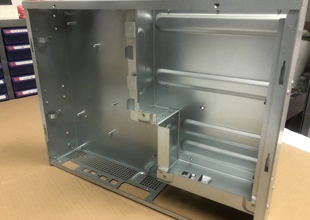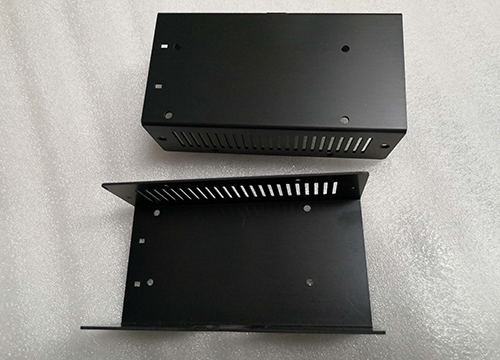

Sheet metal parts are widely used in chassis cabinets, medical equipment, communication devices, automation equipment and other fields. To ensure the appearance quality and service life of the product, we cannot rely solely on processing accuracy, but also need to pay attention to the pre-spraying treatment, storage method, transportation packaging and on-site installation.
Before powder coating or painting, sheet metal surfaces must undergo degreasing, rust removal, and surface pretreatment, below is the reasons:
Improving Adhesion: Remove oil and oxide layers to ensure a secure coating bond.
Preventing Corrosion Spread: Rust and contaminants, if not removed, can develop beneath the coating, causing blistering and peeling.
Optimizing Coating Results: A clean substrate surface ensures a more uniform coating, avoiding color variations and a grainy appearance.
Common treatments include alkaline cleaning and degreasing, acid cleaning and rust removal, sandblasting, or passivation.
Although painted sheet metal parts have a protective coating, they are still susceptible to damage during transportation. Therefore, we will package them appropriately based on the product's characteristics.
To prevent scratches: Use bubble wrap, pearl cotton, and protective film to isolate and prevent friction from hard objects.
To prevent moisture and rust: Use anti-rust paper, desiccant, and waterproof film for long-distance transportation.
To prevent compression deformation: Thin sheet metal parts should be reinforced with wooden boxes or steel frames.


Packaging options include single-piece packaging (for small parts), bulk packaging (with interlayer stacking), and complete-machine packaging (fixed in a wooden case or cabinet). Avoid vibration, rain, and direct sunlight during transportation, and handle with care during loading and unloading.
Even after packaging, improper storage can damage the spray coating or metal surface:
Keep dry: Warehouses should be well ventilated to avoid moisture and condensation.
Protective against dust and dirt: Cover with protective film to prevent adhesion of dust and chemical vapors.
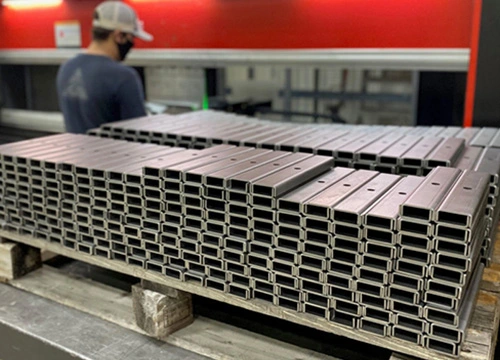
Avoid direct grounding: Place on pallets or skids to prevent moisture from rising from the ground.
Regular Inspection: During long-term storage, unpack the parts regularly to confirm that there is no rust or paint damage.
The durability of sheet metal parts depends not only on the material and coating quality but also on the operating environment:
Indoor Environment: Moderate temperature and humidity ensure long lifespan and easy maintenance.
Outdoor Environment: Ultraviolet rays, rain, and salt spray accelerate coating aging and metal corrosion.
Special Environments: For environments such as coastal areas and chemical plants, stainless steel or reinforced anti-corrosion coatings are recommended.
Therefore, choosing the appropriate materials and surface treatments based on the operating environment during the design phase can extend service life.
Some sheet metal products are assembled after production. Improper assembly can still cause minor damage, such as:
Surface scratches: Direct contact with the painted surface with metal tools or without protective gloves.
Screw slippage or misaligned holes: Improper on-site adjustments can lead to loose structures or surface damage.
Exposure to harsh environments: Without temporary protection during installation, sheet metal parts may be exposed to rain and dust.
Handling and bumps: Large sheet metal parts can easily deform if not securely secured during on-site hoisting.
Solutions include: on-site protection (such as temporary protective film), using appropriate tools, strictly following installation specifications, and performing surface inspections and necessary repairs after completion.

 English
 日本語
日本語 français
 Deutsch
 Español
 italiano
 русский
 português
 Svenska
 Ελλάδα
 Nederland