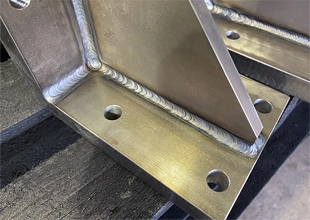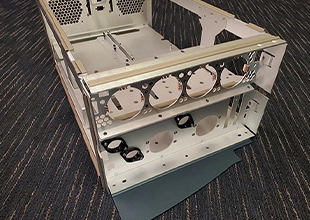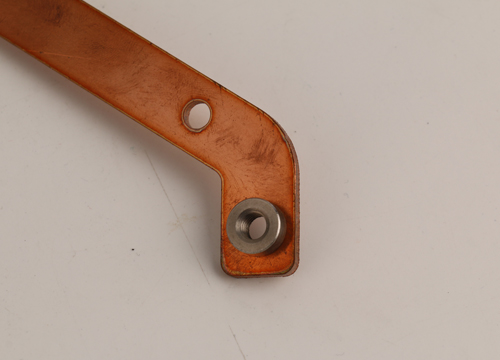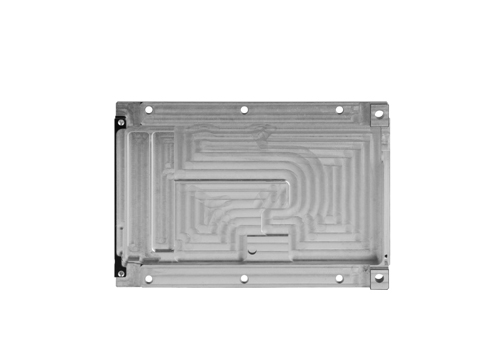

OEM buyers should request quality documents that verify material consistency, manufacturing accuracy, process control, and final product conformity. For most custom sheet metal projects, essential documentation may include material certificates, first article inspection reports, dimensional inspection records, process inspection records, and finish verification documents.
The exact requirements depend on part complexity, application environment, production volume, and customer quality standards. A professional sheet metal fabrication supplier should be able to provide appropriate quality records to demonstrate that manufactured parts consistently meet approved drawings and specifications.
Quality documents provide objective evidence that fabricated components meet engineering requirements throughout the production process. For OEM projects, they are not only inspection records but also a communication tool between buyers and manufacturers.
When working with a sheet metal fabrication manufacturer, quality documentation helps OEM buyers:
Confirm that approved materials are used during production
Verify critical dimensions before assembly
Reduce risks caused by inconsistent production batches
Establish clear acceptance standards
Support internal quality reviews and supplier management
For custom sheet metal parts supplier relationships, proper documentation also improves long-term cooperation because both parties have a clear reference for product expectations, inspection methods, and improvement requirements.

Material verification is one of the first quality checkpoints in sheet metal fabrication. OEM buyers may request documentation confirming that raw materials match the approved specifications before production begins.
Common material-related documents include:
| Document type | Purpose | Typical information included | When it is required |
|---|---|---|---|
| Material certificate | Verify material compliance | Material grade, thickness, supplier information | Critical parts or controlled projects |
| Incoming inspection record | Confirm received material condition | Dimensions, appearance, quantity check | Regular production control |
| Material identification record | Maintain traceability | Batch number, material source | Projects requiring tracking |
Material records are especially important when parts require specific mechanical properties, corrosion resistance, or consistent forming performance.
A reliable sheet metal fabrication supplier should maintain clear material control procedures to prevent incorrect material usage during manufacturing.
First article inspection (FAI) is commonly requested when introducing a new part, modifying an existing design, or starting production with a new supplier.
A first article inspection report typically verifies:
Overall part dimensions
Critical hole locations
Bend angles and formed features
Drawing requirement compliance
Special customer-defined characteristics
For complex fabricated components, dimensional inspection reports help confirm that tooling, programming, and manufacturing processes are correctly established before mass production.
| Inspection document | Main purpose | Typical application |
|---|---|---|
| First article inspection report | Validate initial production parts | New projects or design changes |
| Dimensional inspection report | Confirm production accuracy | Critical dimensions and assemblies |
| Measurement report | Record actual inspection results | High-precision components |
Requesting these documents early helps OEM buyers identify potential issues before large-volume production begins.
In-process and final inspection records demonstrate that quality control is maintained throughout manufacturing rather than checked only at the end.
During fabrication, inspection may focus on:
Sheet cutting accuracy
Forming consistency
Weld or assembly quality when applicable
Surface condition
Final dimensions
Final inspection documentation confirms that completed parts meet customer-approved requirements before shipment.
| Inspection stage | Quality focus | Example records |
|---|---|---|
| Incoming inspection | Material verification | Material check report |
| Process inspection | Manufacturing consistency | Operation inspection records |
| Final inspection | Finished part approval | Final inspection report |
A professional sheet metal fabrication manufacturer should define inspection points according to part requirements instead of applying identical inspection procedures to every project.
Traceability requirements vary depending on the application and customer quality expectations. Some OEM projects require detailed production history, while others only need basic inspection confirmation.
Possible traceability records include:
Material batch information
Production date records
Inspection results
Production lot identification
Finishing process records
Surface finish documentation may include:
Coating type
Finish specification
Appearance inspection results
Surface treatment confirmation
For sheet metal parts used in demanding environments, finish records help ensure that the final components maintain expected appearance and durability.
Quality requirements should be defined clearly during the quotation stage rather than after production begins. A detailed RFQ or purchase order helps suppliers understand inspection expectations and documentation needs.
OEM buyers should consider including:
Approved drawings and revision levels
Material specifications
Dimensional tolerance requirements
Required inspection reports
Documentation submission timing
Packaging and identification requirements
A well-defined quality section allows a sheet metal parts supplier to plan manufacturing processes, inspection methods, and production controls more effectively.
Clear communication during the RFQ stage also helps avoid misunderstandings related to acceptance criteria and delivery requirements.
Common documents include material certificates, dimensional inspection reports, first article inspection reports, and final inspection records.
No. It is usually required for new parts, major design changes, or projects with strict quality requirements.
They confirm that the correct material grade and specifications were used during production.
The PO should define required inspections, documentation, tolerances, and acceptance criteria.
Review their quality control process, inspection capability, documentation practices, and experience with similar components.
Quality documentation plays an important role in ensuring reliable OEM sheet metal production. Material records, inspection reports, traceability information, and finish documentation allow buyers to verify that fabricated components meet engineering requirements.
Choosing a capable sheet metal fabrication supplier is not only about manufacturing capability but also about process transparency and quality control discipline. A professional sheet metal fabrication manufacturer should provide clear documentation that supports consistent production, efficient communication, and long-term OEM partnerships.
For companies looking for a dependable sheet metal parts supplier, establishing quality requirements early helps create a smoother manufacturing process and reduces risks throughout the product lifecycle.

 English
 日本語
 français
 Deutsch
 Español
 italiano
 русский
 português
 Svenska
 Ελλάδα
 Nederland